



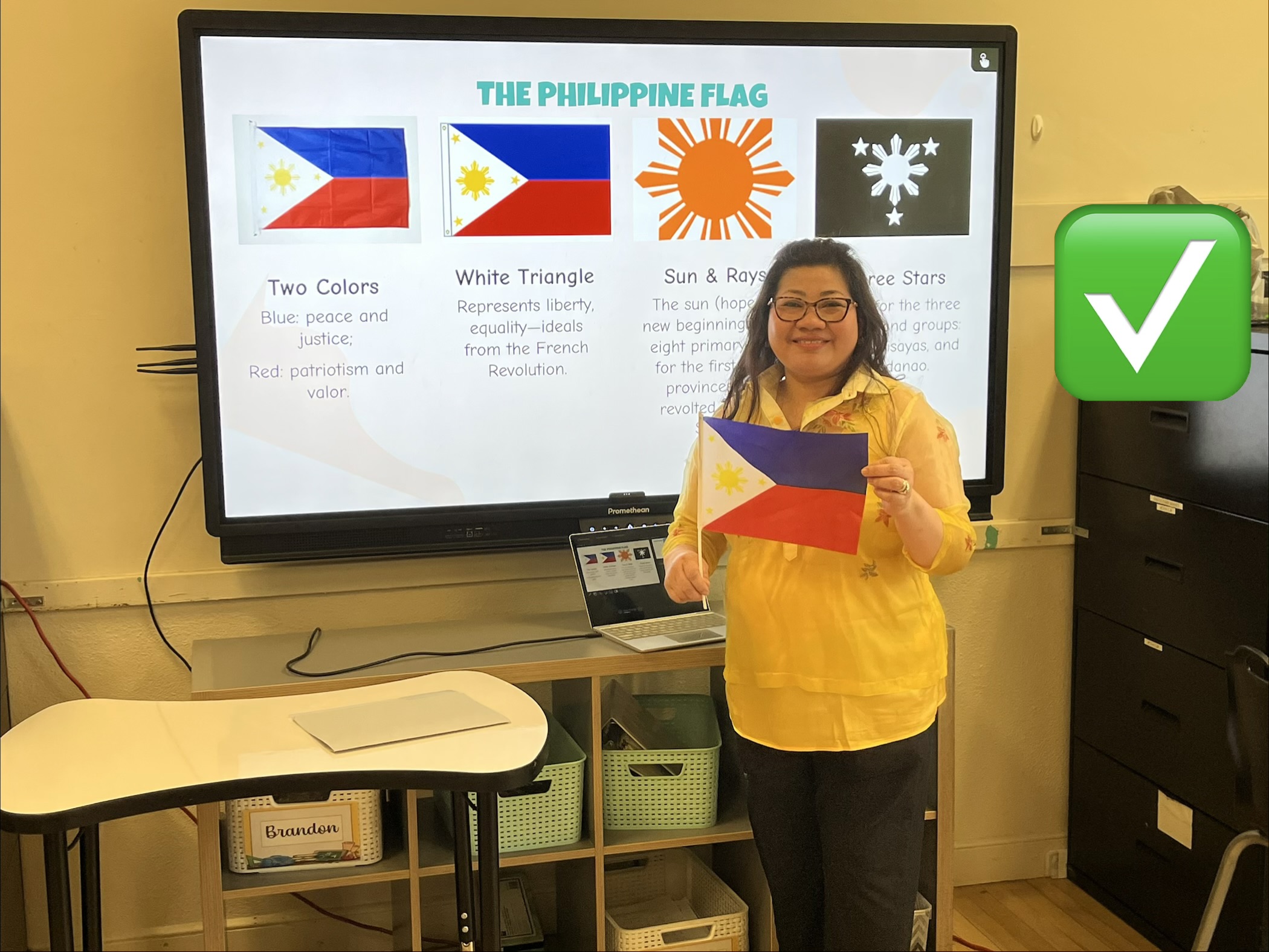

In special education, progress rarely arrives as a dramatic breakthrough. It comes in fragments—a student making eye contact for the first time, a single word spoken aloud, a hand reaching for a tool instead of hesitating. For Jovy Martinez Franks, those fragments are the entire point.

Now 45 and working as an Education Specialist for moderate-to-severe students at Spectrum Center Schools and Programs, a ChanceLight Education provider in California, Jovy has built a career on the conviction that the smallest gains carry the heaviest weight. “The highlight of my career so far has been witnessing my students achieve small but powerful milestones, independence, communication breakthroughs, and increased confidence—which remind me daily of the impact of patient, consistency, and compassionate teaching,” she shares with TGFM.

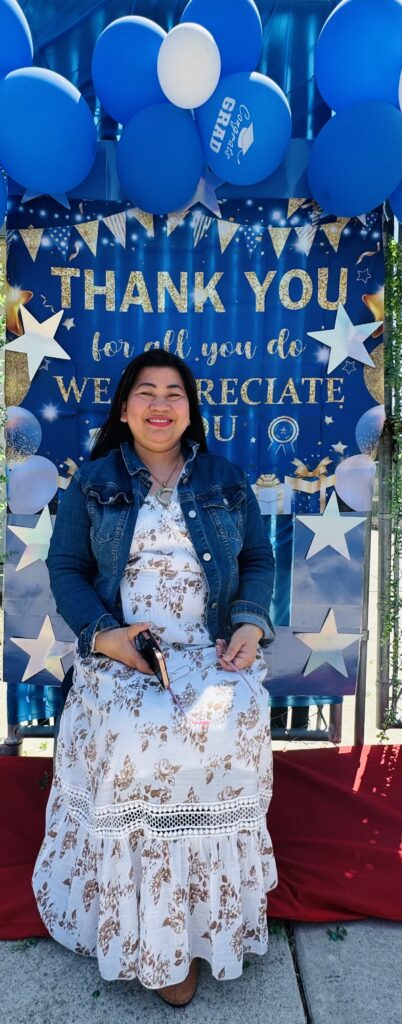
It is a philosophy two decades in the making, and one that carried her roughly 11,000 kilometers from Cagayan de Oro to a classroom where almost everything she thought she knew about teaching would be tested.
The educator before the journey
Long before she held a California teaching credential, Jovy was already a fixture in Philippine classrooms. She spent 13 years with the Department of Education in Cagayan de Oro City and another five at Nanuri International School, accumulating responsibilities that read less like a job description and more like a school directory: class adviser, reading teacher, school reading coordinator, science coordinator, research coordinator, scout master, feeding program organizer.
The recognition followed. She was named Most Outstanding Classroom Teacher in 2018, Outstanding Teacher-Researcher in 2020, and coached a regional-winning read-a-thon team in 2022, among a long list of district and division honors. But the work that would define her direction happened off the official roster. Before going overseas, she founded and ran Miracle Child Learning Center, a Philippine center dedicated to learners with special needs.
That experience, she explains, sharpened a calling that had been forming for years. “I chose this field because I have a deep passion for helping children reach their potential, especially those who learn differently and need extra guidance and understanding,” she says. To deepen her practice, she earned a Master’s in Education majoring in Special Education, along with a certificate in teaching students with special needs.
Why leave at the peak
Here is the part that complicates the usual migration narrative: Jovy did not leave the Philippines because she was struggling. She left when she was, by most measures, thriving—award-winning, established, running her own center.
Her reasons were layered. Part of it was professional hunger. “I wanted to grow as a special education teacher by deepening my understanding of structured support systems like the IEP process, which is not yet fully developed or consistently prioritized in the Philippines,” she says. The Individualized Education Program—a formal, legally backed framework for tailoring instruction to each student—represented a system she wanted to learn from rather than approximate.
Part of it was practical. She is candid about financial stability being a genuine factor, the kind of compensation that lets an educator build a career “with focus and security.” And part of it, as with so many overseas Filipino workers, was about the people back home. “Every step I take forward is not just for my own growth, but also a way of giving back to the people who have supported me from the very beginning,” she says.

In August 2023, she took her first overseas role as a special education teacher in the United States. The credentials were strong. The confidence, it turned out, would take longer to arrive.
Unlearning to grow
What caught Jovy off guard was not the teaching itself but everything surrounding it. The classroom structure was different. So were the communication styles, the documentation demands, the behavior management protocols, and the sheer level of independence expected of both teachers and students.
She does not soften how disorienting it felt. “At first, I struggled with confidence and felt overwhelmed trying to meet new standards while still unlearning and relearning practices,” she recalls. “There were moments of doubt, especially when adapting to new systems and expectations in behavior management and documentation.”
Her response was deliberate rather than dramatic. She treated each difficulty as material to learn from—asking questions, shadowing experienced colleagues, sitting through trainings, and putting in extra hours to understand the IEP process. “I also reminded myself why I chose this path—to grow and become a better educator for my students,” she says.
The support mattered too. She leaned on patient colleagues willing to guide her and stayed tethered to family for emotional grounding. Over time, the friction did what friction often does to those who refuse to quit. “These struggles helped me become more confident, adaptable, and resilient,” she says—a more culturally responsive educator than the one who had stepped off the plane.

The next chapter, and the one after
Jovy is now thinking past her current tenure, and her plans have taken on new weight since she recently got married. The personal milestone, she says, has sharpened her appetite for a stable, balanced future.
Professionally, she has her sights set on a doctorate, with the goal of becoming a school behaviorist—deepening her grasp of functional behavior assessments and positive behavior support so she can serve students with the most complex needs. The longer arc bends back home. She wants to return the knowledge she has gathered abroad to Philippine special education, strengthening structured programs and IEP implementation for learners who are too often underserved.
For the kababayans navigating the same uncertain terrain, her advice is grounded in the same discipline that carried her through her own doubt. “Always remember why you came here and stay grounded in your purpose,” she says. “Choose people who respect your growth, not those who distract you from it.”
And for the aspiring J1 teachers eyeing the same path, she offers a line that doubles as a summary of her own journey. “Prepare your heart as much as your skills,” she says—because the work, in the end, was never only about teaching.
