



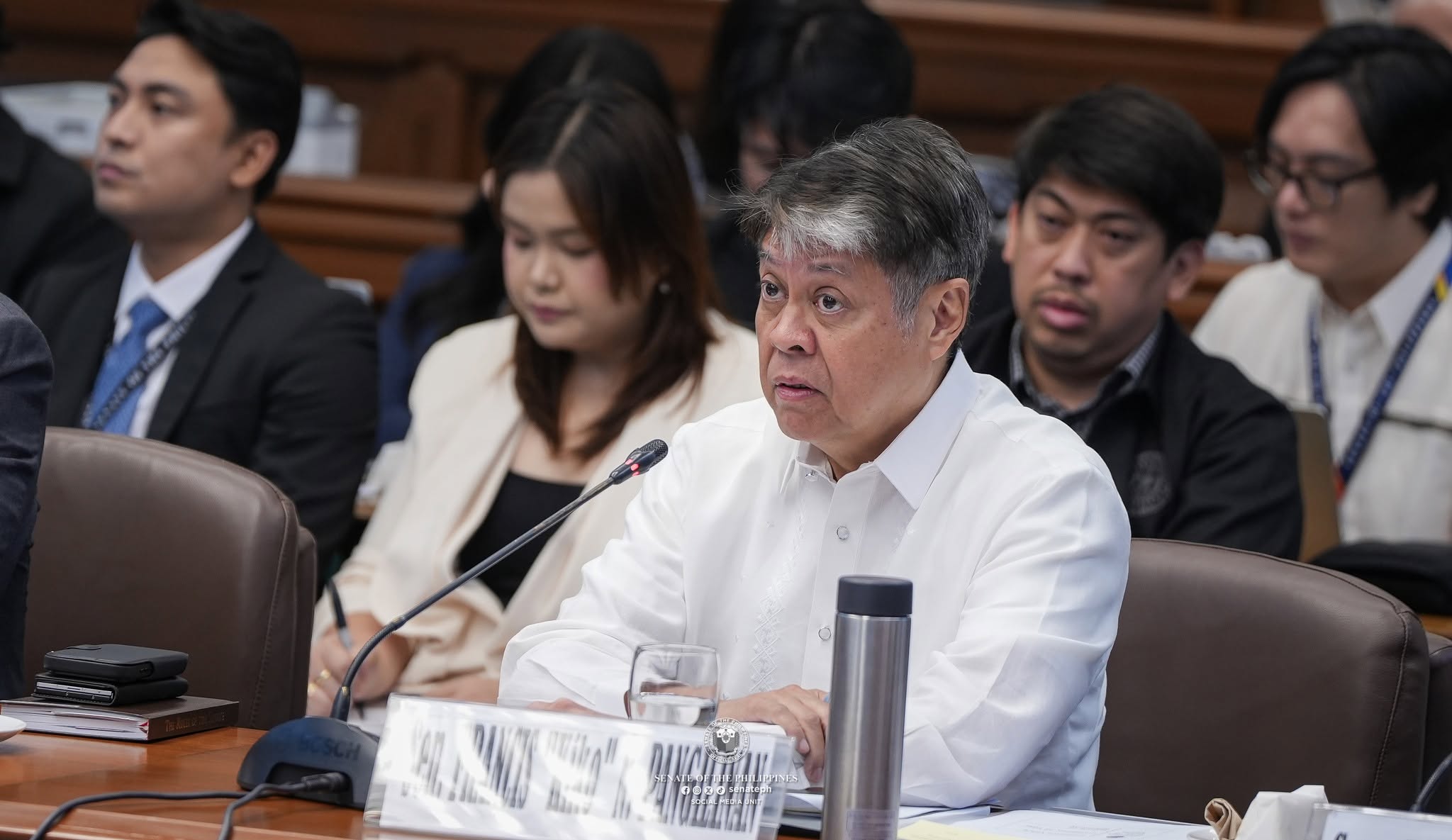

Restoring shattered livelihoods — not just delivering immediate aid — sits at the center of a measure Senator Francis “Kiko” Pangilinan brought before the chamber this week, as parts of Mindanao reel from one of the strongest tremors to hit the region in years.

Pangilinan filed Senate Bill No. 2259 on June 9, seeking a ₱15-billion supplemental appropriation for fiscal year 2026. The money would augment the National Disaster Risk Reduction and Management Fund and be channeled into recovery work across the provinces and cities battered by the magnitude 7.8 earthquake that struck offshore Sarangani on Monday, June 8.
The senator framed the appropriation around two timelines. “Ang prayoridad natin sa gitna ng sakunang ito ay ang kapakanan ng ating mga kababayan sa Mindanao,” he said on Tuesday, pointing to the safety of residents and their eventual return to normal life and work. Beyond the relief that affected families need now, he argued, sustained government backing will be what allows communities to climb out of the disaster over the longer term.
Under the bill, the funding would be drawn from any unappropriated money in the National Treasury. The text of SB 2259 describes the appropriation as covering relief, recovery, rehabilitation, repair, and reconstruction. According to the measure, the budget is meant to bankroll the restoration of schools, hospitals, roads, bridges, irrigation networks, power and transport facilities, housing, and local government infrastructure, while also extending help to farmers, fisherfolk, and other sectors whose means of earning were upended.

The geographic stakes are concentrated in Regions XI and XII, where the quake inflicted heavy damage on homes, medical centers, commercial buildings, and public works. The Philippine Institute of Volcanology and Seismology recorded the tectonic event at 7:37 a.m., initially logging it at magnitude 7.0 before revising the figure upward to 7.8. Phivolcs placed the source roughly 32 kilometers southwest of Maasim, Sarangani, at a depth of 33 kilometers, and the agency’s warning triggered tsunami alerts that extended to neighboring countries.
Casualty counts have shifted as assessments continue. The Inquirer reported a toll of at least 35 dead, 12 missing, and more than 200 injured, with General Santos City among the hardest-hit localities. Power disruption compounded the crisis: the Department of Energy said roughly 157,000 consumers lost electricity, with Energy Secretary Sharon Garin citing two offline plants — the SMC Malita coal facility in Davao Occidental and the Sarangani Energy Corporation plant in Maasim — for a generation shortfall of about 832 megawatts.
Pangilinan was not alone in pressing for a fast government response. Senator Bam Aquino, returning as chair of the Senate Committee on Basic Education, urged officials to accelerate the release of repair money for classrooms, noting that the Department of Education had counted more than 1,000 damaged classrooms. Separately, members of the Senate majority pledged to donate one month’s salary toward the relief and rebuilding effort.
The bill’s reach into education funding reflects the timing of the disaster, which landed as public schools nationwide were opening for School Year 2026–2027. Pangilinan said his office had also been pushing for psychosocial interventions for young pupils traumatized when the ground shook during their first day of class.
