



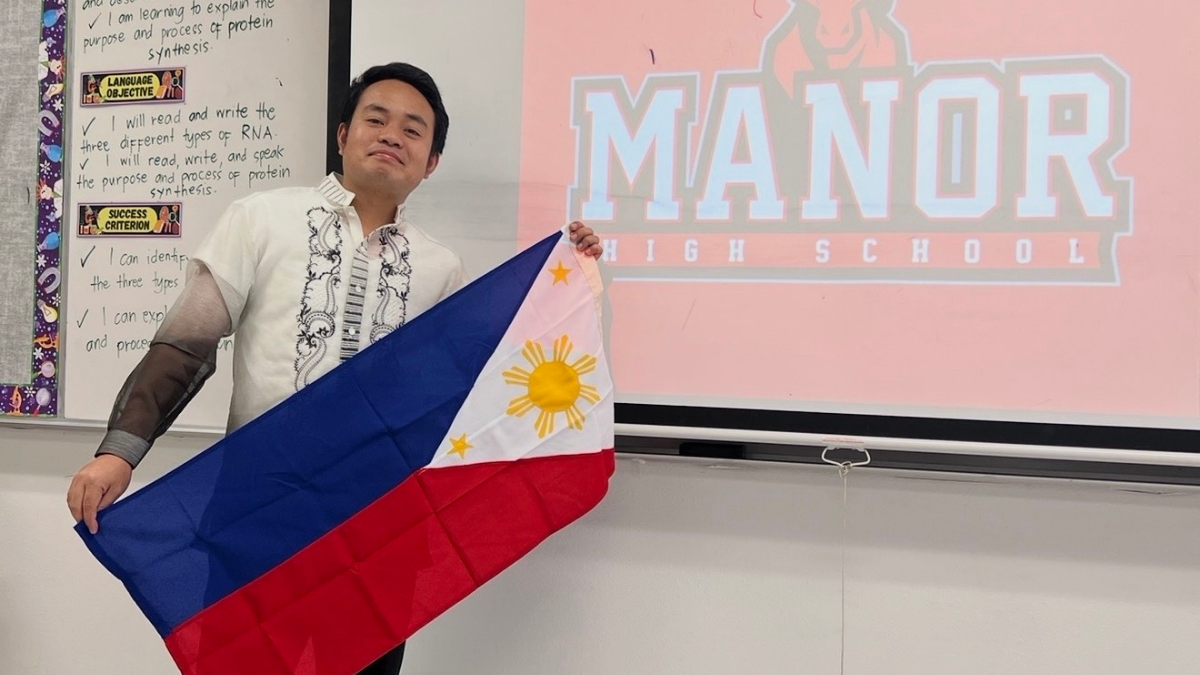

Ask anyone who has stood in front of a classroom of teenagers, and they will tell you the same thing: the hardest part is not the subject matter. It is convincing thirty restless minds that the subject matter is worth their attention. Robert Amploquio has spent the better part of a decade solving that exact problem, and his methods are not entirely conventional. The 32-year-old science teacher at Manor High School in Texas teaches biology and chemistry by day. By night, he sometimes shares a stage with the kinds of Filipino artists his students’ parents grew up watching.

That dual life — educator and performer — did not happen by accident. It is the product of a journey that began in a small Philippine high school and led, improbably, to a Pre-Advanced Placement science department in central Texas.

From Taft to Texas
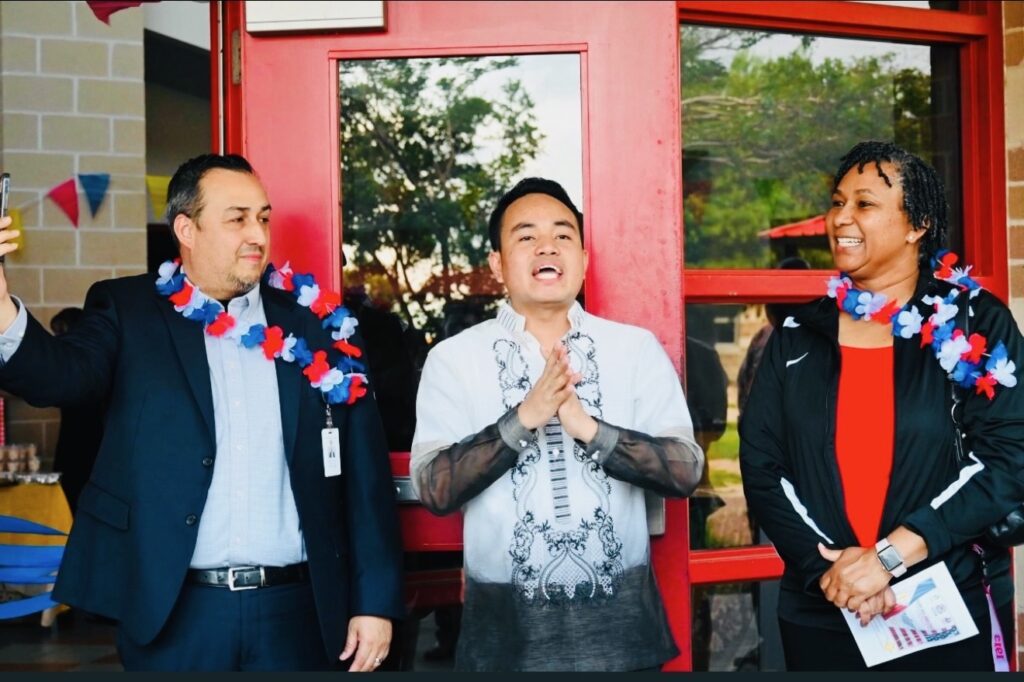
Before he ever set foot in an American classroom, Robert was building a reputation back home. At Taft National High School, he taught senior high school science and wore an exhausting number of additional hats. He coordinated the Senior High School Science Department, ran the MAPEH program, and managed the school’s WATCH initiative. He coached students through Science Process Skills competitions, eventually winning at the division level and earning a spot at the regional contest.
But the classroom was only half of his identity even then. Robert was a fixture in the Division Performing Arts Guild, singing and dancing at division events, moving easily between pop, ballad, and rock. The teacher who could break down cellular respiration could also, when the occasion called for it, command a stage.
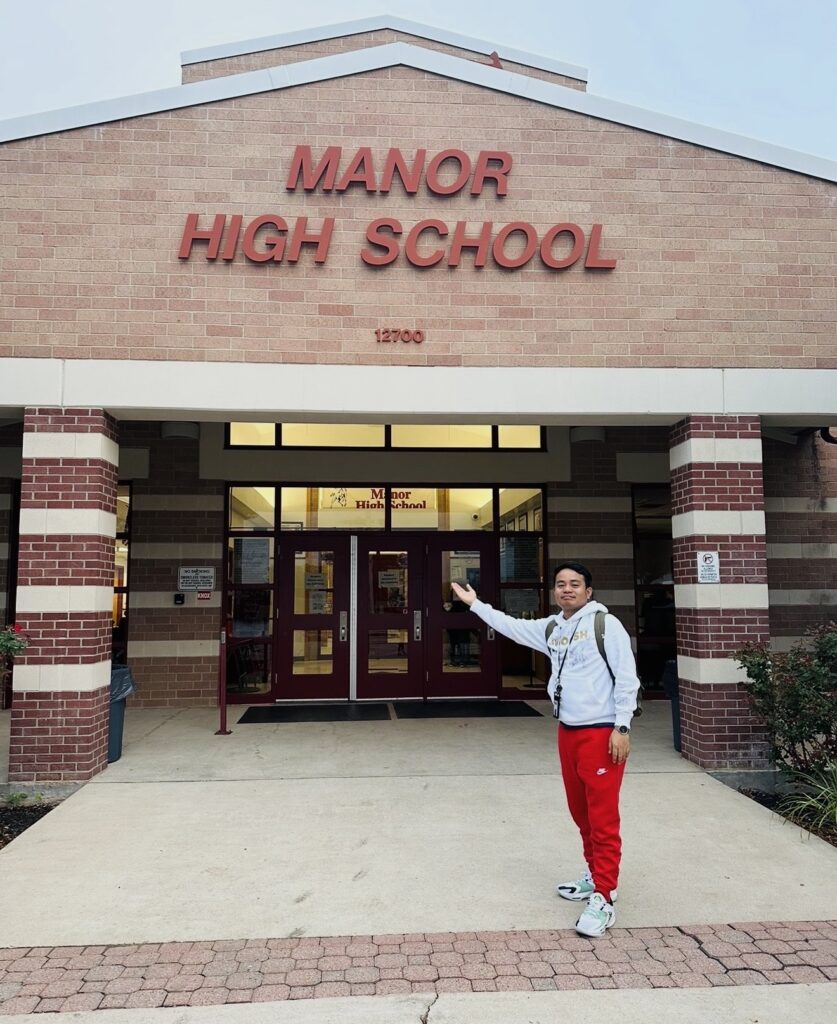
In August 2022, he carried both of those selves across the Pacific. The move to Manor marked his first overseas teaching post and what he describes as a major milestone in his professional journey. Today he teaches 9th-grade Pre-AP Biology and Pre-AP Chemistry, courses designed to prepare students for the rigor of early college-level work.
What the move actually cost
It is easy to frame an international teaching job as a clean opportunity — better pay, broader horizons, a fresh start. Robert’s version came with a far harder backstory. He made the leap at the height of the pandemic, when the paperwork, interviews, and processing fees collided with global uncertainty and genuine fear.


“Despite the global crisis, uncertainty, and fear brought by the virus, I remained determined to pursue my dream,” he shares with TGFM. The financial side was brutal. To cover the requirements, he borrowed money from a bank and leaned heavily on family and relatives who helped both financially and emotionally. Friends and colleagues supplied the rest — encouragement and moral support during what he calls the most difficult moments of the process.
His faith carried much of the weight. “Looking back, I am deeply grateful to the Almighty Father for shielding me from harm, giving me courage and perseverance, and never failing me in achieving this life-changing milestone,” he says. The decision was not only about himself; it was about what he calls a greener pasture, a way to support his family and build something stable.
Why the classroom still wins

For all the talk of salary and stability, what animates Robert most is the work itself. He chose education, he says, because he finds genuine joy in guiding teenagers through experiments and discoveries.
“Seeing students become excited and amazed while learning Biology and Chemistry gives me a strong sense of purpose and fulfillment as an educator,” he says. He is quick to credit the people around him — administrators, colleagues, and especially his students — for the support that has shaped his teaching journey in the United States.
What he values most is that learning refuses to stay contained. “Learning does not only happen inside the classroom, as we also explore the world around us through hands-on activities and real-life scientific experiences,” he says. Teaching in America has also stretched him personally, building confidence and independence as he works with students from backgrounds far different from those he knew back home.
The other stage
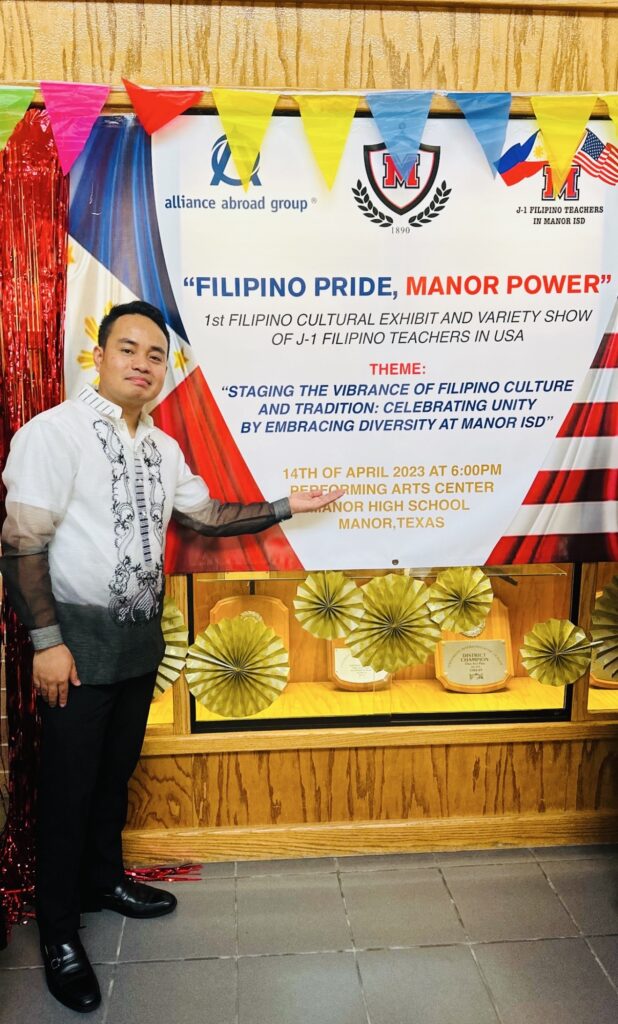
Then there is the music. Outside school, Robert has become something of a regular on the Filipino cultural circuit across Texas, performing as a guest singer in cities including Austin, Houston, Dallas, and San Antonio. Singing, he says, is how he copes with stress and stays connected to his community — a way to inspire fellow Filipinos and strengthen Filipino-American ties.
The bookings are not modest. He is slated to perform at Carol Banawa’s concert in San Antonio this June 2026, Sweetnotes Music live in Houston in July 2026, and Fiesta Ko sa Texas in August 2026 alongside celebrity guest Diether Ocampo. He also competes in karaoke contests for fun, and in 2025 he was crowned Grand Champion of the Karaoke Idol at the 4th Annual Filipino-Pacific Islander Festival in San Antonio.
What comes next
Robert is not finished moving. After his tenure in the United States, he plans to explore teaching opportunities in other countries with high demand for educators and stronger professional growth. He intends to keep promoting Filipino culture through music wherever he lands. And there is unfinished academic business — he is already in the dissertation stage of his Doctorate in Education and hopes to return to the Philippines someday to complete it.
His advice to fellow Filipinos abroad is rooted in the same faith that carried him through 2022. He points to Jeremiah 29:11 and the resilience he believes is baked into the Filipino character. “When life becomes difficult and you feel tired, take time to rest but never give up on your dreams for yourself and for your loved ones waiting for you back home,” he says.
It is the kind of advice that sounds equally at home in a classroom or from a stage — which, for Robert, has always been the point.
