




Quality control work gets little glory. There are no ribbon-cuttings for the engineer who said no to a bad weld, no headlines for the manager who caught a spec deviation before it became a catastrophe. The real victories in this profession are invisible — disasters that never happened, failures that were stopped before they started.

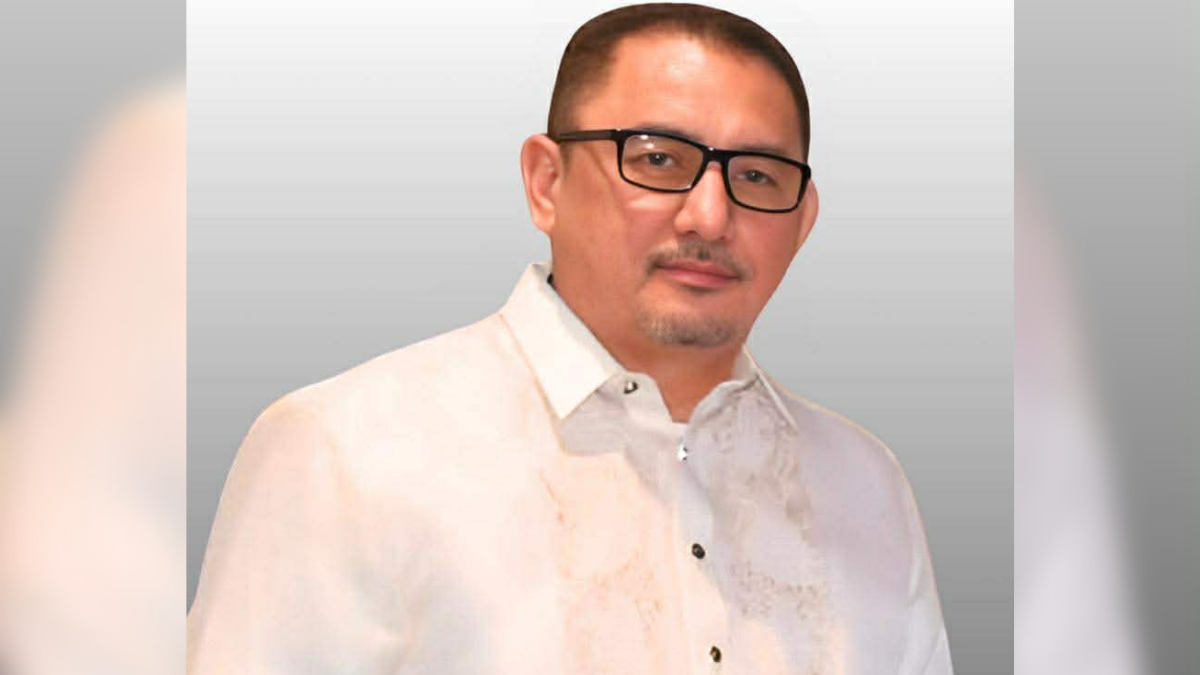
Benedict Anonuevo De Torres has spent 38 years stacking up those invisible victories.
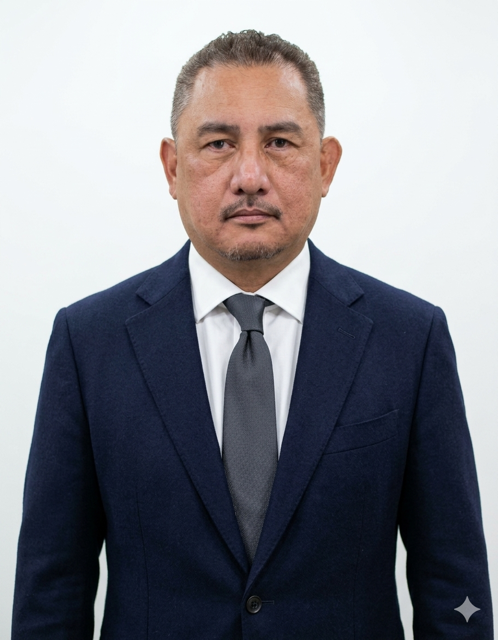
Now 60, the Saudi Aramco-approved QA/QC Manager for Sinohydro Corp. Ltd. in Al Khobar, Saudi Arabia, has built a career on the unglamorous discipline of enforcing standards that most people take for granted every time they turn on a light switch or pump fuel into their car. Across more than two decades in the Middle East, he has learned that the hardest part of his job has almost nothing to do with engineering.
A move that changed everything
Before Saudi Arabia, there was a younger engineer in the Philippines, learning the fundamentals of structural work, earning his reputation on local projects, building the kind of quiet credibility that doesn’t announce itself. By the time De Torres made the decision to go abroad in 2004, he already had a strong foundation. What he didn’t have was scale.
“The international stage—specifically the high-stakes environment of Saudi Arabia’s oil and gas sector—offered a level of technical rigor and project complexity that was unparalleled,” he shares with TGFM. He wasn’t wrong. What he signed up for was a world in which a miscalculation doesn’t just mean budget overruns — it means structural failure in a facility processing millions of barrels of oil.
His first posting was with Al Osais, where he came in as a Project Engineer. He calls it a “foundational crucible.” That’s not hyperbole. Moving from the Philippines to Saudi Arabia in 2004 meant adapting, fast — to a multinational workforce, to the uncompromising standards of Aramco, to a professional culture where technical authority had to be earned on the floor every single day.
“I often faced initial resistance when implementing strict quality protocols, as balancing project deadlines with rigid compliance occasionally led to friction with teams more focused on speed than standard operating procedures,” he recalls.
His solution was not to dig in and enforce harder. It was to explain. “Rather than simply enforcing rules, I made it a point to educate my teams on the ‘why’ behind the specifications, demonstrating how quality control serves as a safeguard for their own safety and professional reputations.” Gradually, the friction became collaboration. The teams that once pushed back became the ones who called him first when something looked off.
The weight of the stamp of approval
Getting the Aramco approval designation — Saudi Aramco Approval No. 80004832 — is not a formality. It is among the most recognized endorsements in the global energy and infrastructure sector, awarded only to professionals who can demonstrate sustained, documented competence in managing quality systems for high-risk, high-complexity projects. For De Torres, it is the single credential that he points to as the clearest marker of what 38 years of deliberate work can build.
But he is careful not to let the credential speak louder than the work itself. “In the high-pressure environments of Saudi Aramco mega-projects, I have seen brilliant engineers falter not because they lacked the knowledge, but because they lacked the temperament to handle high-stakes pressure or the integrity to stand their ground when quality was being compromised for the sake of a schedule.”
He says the most courageous thing a QA/QC engineer can do is something that sounds absurdly simple: say no. “As a QA/QC Manager, I’ve learned that saying ‘no’ to a substandard process is often the most courageous and professional act an engineer can perform.” In an industry where project timelines are sacrosanct and budgets are immense, that two-letter word carries extraordinary professional risk. He has said it anyway, consistently, for two decades.
That reputation — for being the person in the room who will not bend — is what eventually earned him his current role managing quality systems for multi-million dollar oil, gas, and infrastructure projects at Sinohydro, one of the world’s largest hydropower and construction conglomerates.

Leading, not just managing
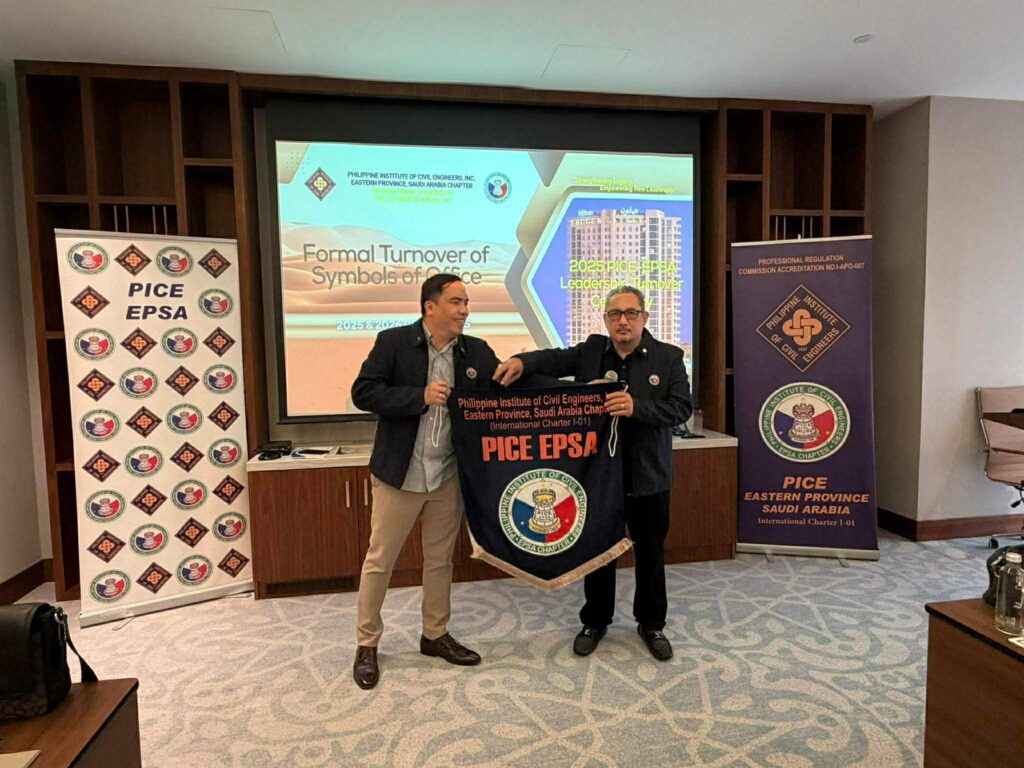
Earlier this year, De Torres added a new title: 2026 Chapter President of the Philippine Institute of Civil Engineers (PICE) – Eastern Province Saudi Arabia Chapter. It is a role that pulls him in a direction he has been moving toward for years — away from pure technical management and toward something that might better be described as stewardship.
“My most enduring sense of pride doesn’t come from my SAP approval number or my lead auditor credentials,” he says, “but from seeing a former subordinate now leading their own department.”
That sentiment shapes how he spends the hours outside the construction sites and technical audits. He organizes seminars, runs coaching programs, mentors junior engineers. The Filipino engineering community in the Eastern Province of Saudi Arabia is a tight one — people who share not just a profession but the common experience of building careers far from home, carrying the dual weight of personal ambition and family obligation.
He speaks about that community with real warmth. The early years abroad were difficult not just professionally but personally. Distance from family was a constant pressure. Finding reliable support required effort. He credits two sources of stability during those leaner years: his family, who gave him the long-term vision to keep going, and the community of fellow Filipino expatriates, who gave him the day-to-day. “Their camaraderie ensured that while I was far from home, I was never truly isolated,” he says.
To fellow Filipinos navigating the same terrain, his advice is blunt and practical. On careers: never stop being a student. “The international market is indifferent to what you knew yesterday; it only cares about what you can deliver today.” On finances: draw the line. “You must have the courage to set boundaries and prioritize investments over consumption.” On relationships: be honest, even when it’s uncomfortable. “Distance can create gaps that only honesty and consistent presence—even if digital—can bridge.”
What comes next
At 60, De Torres is not thinking about retirement in any conventional sense. What he is thinking about is a different kind of project.
When his overseas tenure eventually closes, he plans to return to the Philippines and do for the domestic engineering sector what two decades abroad did for his own career: raise the floor. He envisions consultancy work that brings Saudi Aramco-level quality systems into local firms and government infrastructure projects — not as a foreign import, but as something that belongs here too.
Beyond consultancy, he wants to work on what he calls the “advocacy of technical education and professional empowerment” — mentoring young engineers, supporting scholarship programs, running workshops aimed at students who don’t have connections or resources but have the aptitude to compete on an international stage.
“For me, the end of my tenure abroad is not a retirement, but the beginning of a new chapter where my lifetime of experience serves as a catalyst for growth, integrity, and the continuous upliftment of my fellow countrymen.”
It tracks, for someone who has spent his career arguing that the most important thing a professional can do is hold the line on standards — even when no one is watching, even when it would be easier not to. The concrete sets. The welds cool. The audits close. And somewhere in a completed mega-project in the Eastern Province of Saudi Arabia, the quality that De Torres refused to compromise on is quietly, invisibly doing its job.
That’s the kind of work that doesn’t make headlines. That’s exactly the point.
