



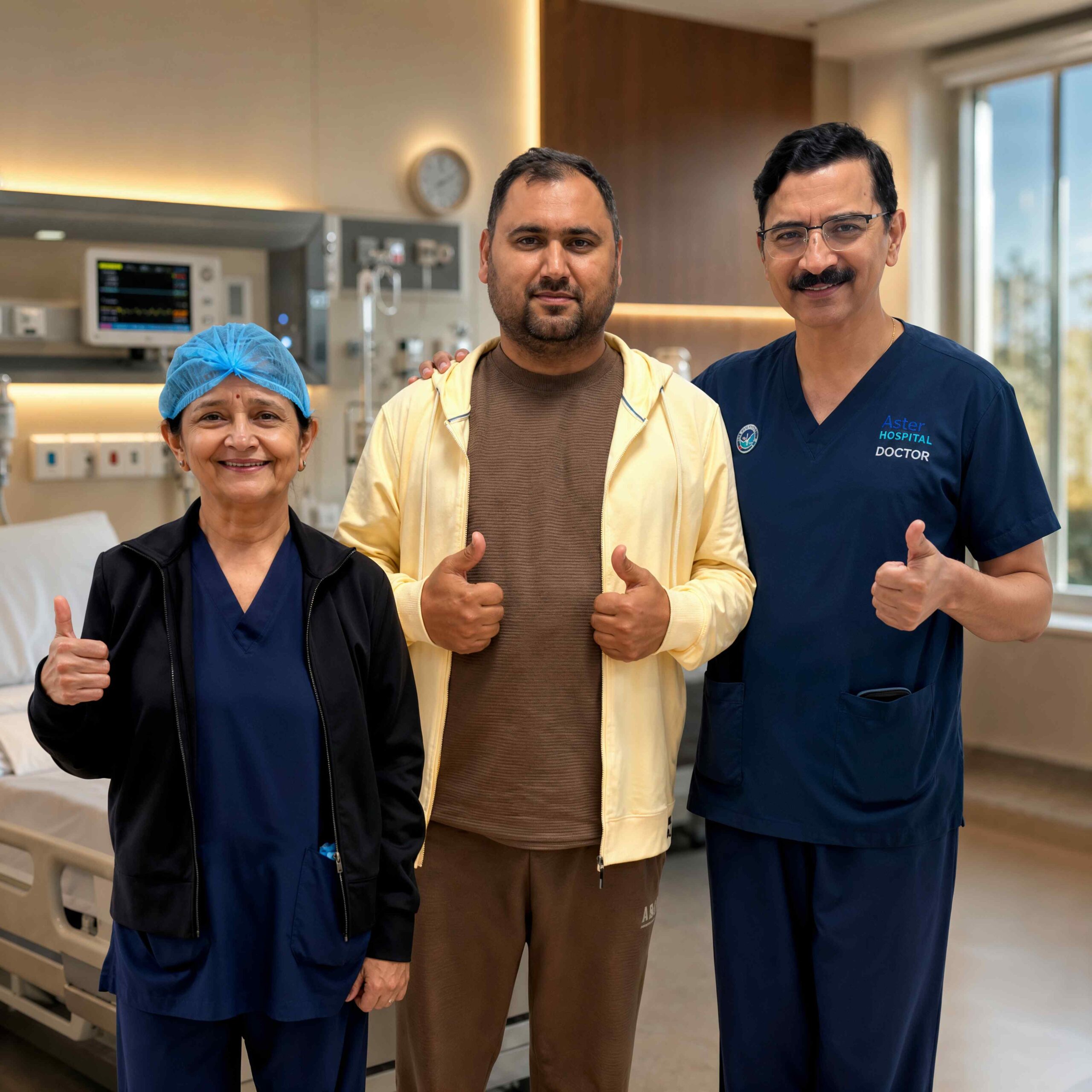

A 32-year-old Pakistani professional based in Dubai underwent a rare mitral valve repair surgery at Aster Hospital, Al Qusais — and returned to work without the lifelong blood-thinning medication he was told he would need.

Ijaz Mehmood Rana Mehmood, who works in the solar industry and is a father of two, had been living with rheumatic mitral stenosis, a condition in which the heart’s mitral valve becomes severely narrowed due to damage from rheumatic disease. His condition had deteriorated to the point of causing a stroke — a consequence of clot formation triggered by the failing valve — before he sought care at the Al Qusais facility. He had previously been advised by another hospital to undergo a full valve replacement involving a mechanical valve.
Instead of replacement, the surgical team at Aster performed a mitral valve repair using a procedure called the “Ship Technique,” developed and carried out by Dr. Shipra Shrivastava, Consultant Cardiothoracic Surgeon at the hospital.
“The ‘Ship Technique’ allows us to address the full complexity of rheumatic valve damage by reconstructing the commissures, which are essential for normal valve movement,” Dr. Shrivastava said. “Besides conventional repair, the Ship technique of commissural augmentation method restores the natural dynamics of the mitral valve. It offers durable results and significantly improves quality of life. This approach also helps patients avoid complications associated with blood-thinning treatment, such as stroke or bleeding, while preserving their native valve.”
The technique focuses on parts of the valve anatomy that standard repair surgeries typically do not address, allowing the valve to function closer to its natural state and extending its durability.

His care involved a multidisciplinary team spanning cardiothoracic surgery, cardiology, and neurology — including Dr. Sandeep Shrivastava, Dr. Jaffar Vali Sayyed from neurology, and Dr. Anil Prahalada Rao Kumar from cardiology.
Dr. Sandeep Shrivastava noted the demographic pattern underlying cases like this one: “Rheumatic mitral valve disease can be particularly aggressive, especially in the Asian population, and often affects younger individuals. Timely intervention and the right surgical strategy are crucial. In this case, we were able to repair the valve and restore its function effectively. This helped the patient avoid long-term complications associated with valve replacement and lifelong blood-thinning medication.”
The patient was discharged in stable condition following an uneventful recovery and has since returned to his normal routine. “I am extremely grateful to the doctors and the entire medical team at Aster Hospital, Al Qusais for their care and support throughout my treatment,” he said. “From diagnosis to surgery and recovery, everything was handled with professionalism and compassion. Today, I feel much better and have returned to my normal life without any symptoms.”
Rheumatic heart disease remains a notable public health burden across the MENA region, affecting an estimated four in every 1,000 people. Aster Hospital, Al Qusais reports completing 19 complex valve repair surgeries over the past year, with the majority involving advanced or late-presenting disease — all of whom, the hospital says, are currently symptom-free at follow-up.
