



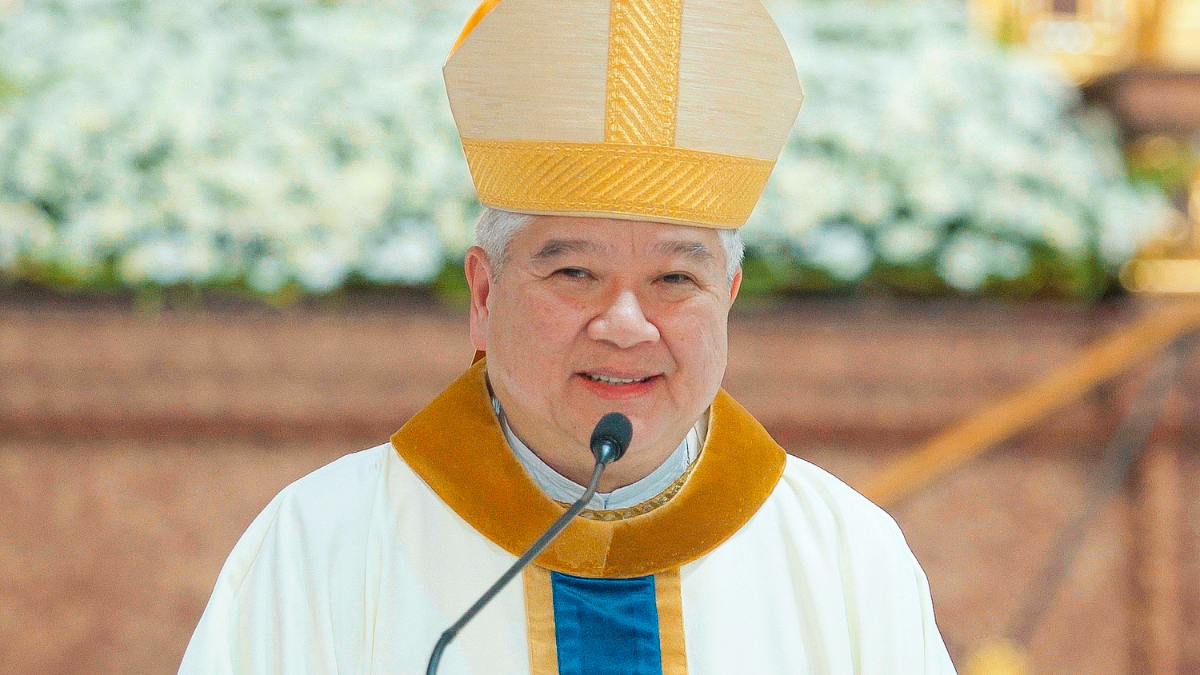

Archbishop Socrates B. Villegas of Lingayen-Dagupan has issued a sharply worded pastoral letter denouncing what he described as a moral collapse in Philippine public life, directing his sharpest criticism at the sudden ouster of the Senate president days after the House of Representatives impeached Vice President Sara Duterte for the second time.

The letter, titled “Sad and Angry But Brave and Hopeful,” was ordered read as a homily across all parishes in the Archdiocese of Lingayen-Dagupan during Masses on Ascension Sunday, May 17.
Senator Alan Peter Cayetano was installed as the new Senate President on May 11, replacing Senator Tito Sotto in a vote of 13 to 9, with two abstentions — the same day the House voted 257 to 25 to impeach Duterte for the second time. Duterte’s allies had staged a leadership coup, wresting control of the chamber ahead of a Senate trial that now requires a two-thirds majority to remove her from office.
Villegas did not mince words about what he saw as the intent behind the move. In his letter, he wrote that the sudden change in Senate leadership — of the body mandated by law to try the impeachment case — was “like a grafitti on the wall showing another devious plan to delay the trial. It was not for the country but for ‘somebody.’ It is obscene.” He called it “a brazen exercise of power,” adding that it was “unbelievable that men and women called ‘honorable’ could do such” a thing. The Senate, he wrote, was being used “as a shield for a suspect-at-large with a valid warrant of arrest from a lawful court.”
The archbishop — a former president of the Catholic Bishops’ Conference of the Philippines — has been among the most outspoken members of the Philippine hierarchy on the Duterte impeachment. He previously declared that delaying or aborting the trial amounts to suppressing the truth and constitutes a sin, framing the Senate trial as a constitutional demand that “must continue to a just verdict.”

The May 17 pastoral letter went further, assigning a share of moral responsibility to ordinary Filipinos themselves. Villegas wrote that the people’s hands were “bloodstained because our hands voted for such corrupt criminals into office,” accusing voters of having chosen tribalism, vote-selling, and celebrity over conscience and competence. “We are not innocent,” he wrote. “What we sow is what we reap.”
But the tone of the letter was not purely one of blame. Villegas called on his flock to channel that accountability into concrete action — prayer, open protest, and sustained civic pressure. “Neutrality has become a mask for cowardice,” he wrote. “Silence in the face of lies is moral surrender.” He urged parishes to reject corrupt candidates in future elections by studying their records and using the ballot as a tool of accountability. “Evil persists not because it is strong, but because good people stop pushing,” the letter read.
The archbishop closed with a passage in Filipino, invoking a call to stand firm regardless of regional or political affiliation: “Walang DDS or pinklawan. Walang Ilocano o Bisaya. Lahat tayo para lamang sa Diyos at sa bayan.”
The four consolidated articles of impeachment against Duterte include charges of misusing confidential funds, bribery, unexplained wealth, and alleged death threats against President Ferdinand Marcos Jr. The articles were transmitted to the Senate on May 12, 2026, where senators have begun procedural deliberations on convening as an impeachment court.
