



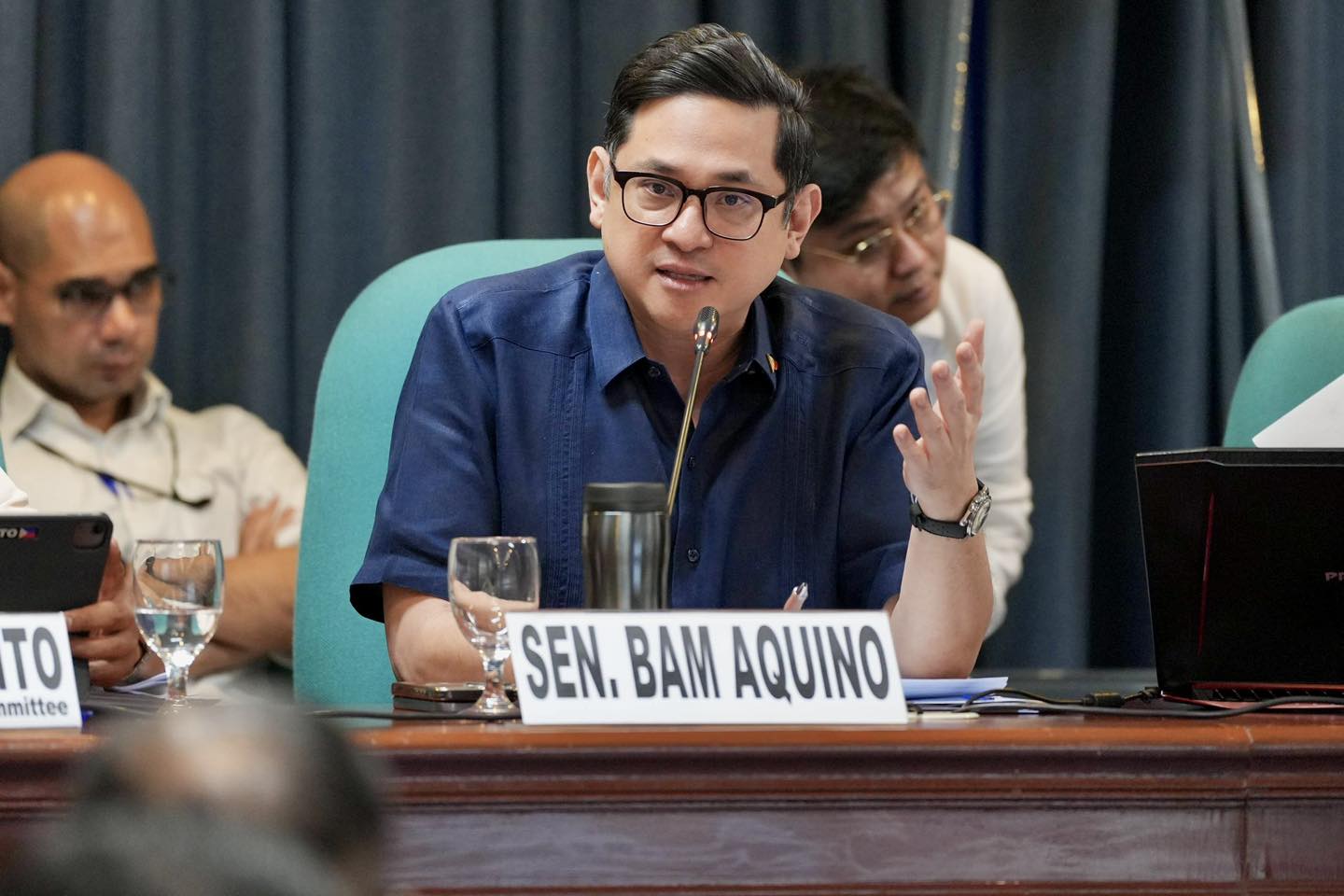

Growing consumer complaints over rising electricity costs prompted Senator Paolo “Bam” Aquino IV to call for a fundamental rethinking of how power subsidies are financed in the Philippines — arguing that the burden should fall on the national government, not on ordinary households.

Aquino, who filed Senate Resolution No. 375, is pushing for the Senate Committee on Energy to scrutinize the design, targeting, and funding structure of electricity subsidies — specifically the lifeline rate established under Republic Act No. 9136, or the Electric Power Industry Reform Act (EPIRA).
At the heart of his concern is the cross-subsidy mechanism, which effectively charges non-beneficiary consumers to help fund discounts for marginalized end-users and government-mandated beneficiaries such as senior citizens and recipients of the Pantawid Pamilyang Pilipino Program (4Ps).
“Current reliance on cross-subsidy mechanisms results in a redistribution of costs that may place a disproportionate and cumulative burden on non-beneficiary consumers, particularly low- and middle-income households who do not qualify for existing subsidies,” Aquino said.
He framed the issue as one of fairness, particularly at a time when consumers are already feeling the squeeze of an oil crisis and higher electricity bills in April.
“Let’s look into this additional payment. There are already many poor Filipinos and the middle class. The people’s expenses should not increase if the government has money for aid,” the senator said.

Manila Electric Company (Meralco), for its part, has defended the April rate increase, citing higher generation charges driven partly by the weakening peso against the US dollar, along with elevated electricity demand during the hot season. Corporate communications head Joe Zaldarriaga noted that the bulk of electricity costs stem from generation and transmission charges, distribution expenses, taxes, and other charges — and that the pass-through subsidies appearing on bills are government-mandated.
Aquino stressed that his resolution is not aimed at eliminating the lifeline rate, but at making it more equitably structured.
“The objective of this policy review is not to remove or diminish the lifeline rate subsidy, but to ensure that it remains well-targeted, fiscally sustainable, and equitably financed, without unduly shifting the burden to other electricity consumers,” he said.
He said shifting subsidy financing — whether partially or fully — to the national budget could improve transparency and accountability in how social protection measures are delivered through the power sector.
“It is important that we know the collection system and that it does not burden our fellow poor middle class compatriots,” Aquino added.
