



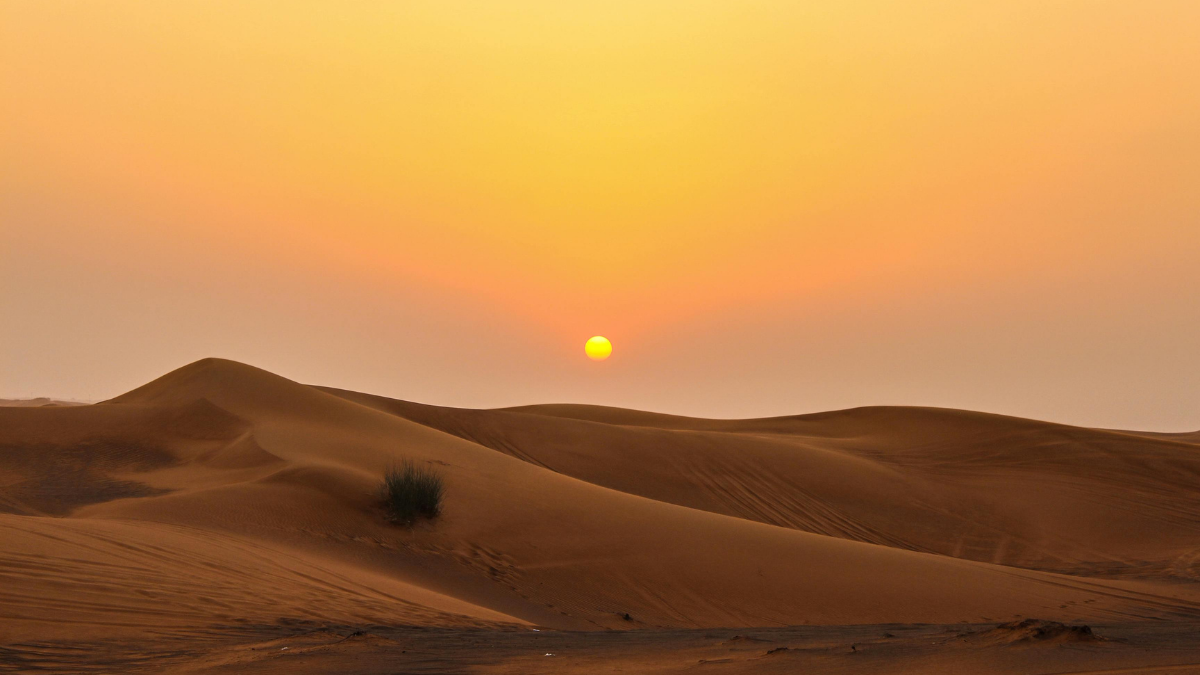

A short-lived dip in temperatures across the UAE is set to reverse within days, as wind patterns shift back toward warmer air flows from the south — a cycle forecasters say is characteristic of the country’s spring-to-summer transition.

Northwesterly winds brought modest relief on Thursday, pulling readings down by roughly 2 to 3°C in both coastal and inland areas after a notable spike earlier in the week. But the reprieve is expected to be brief.
Dr Ahmed Habib of the National Centre of Meteorology told Khaleej Times the cooling should hold through April 26, possibly into the 27th. “After that, winds are expected to shift back to southwesterly. That will again bring warmer air from the south, and we will see a gradual increase in temperatures on the 26th and 27th of April,” he said.
The week’s heat surge was already significant. Temperatures climbed 3 to 4°C nationally on Tuesday and Wednesday, with some parts of the country crossing the 40°C threshold. Dr Habib attributed the spike to a shift in prevailing winds: “We then came under the influence of southerly winds, which brought in a hotter air mass from the south. That is what pushed temperatures up further.”

Inland areas can expect readings between 36°C and 41°C during the warmer phase, while coastal zones are likely to range from 33°C to 39°C. The meteorologist cautioned that even when cooling occurs, it tends to be subtle in effect. “When temperatures come down, it’s usually just by 2–3 degrees, so it doesn’t feel like a dramatic change,” he said.
The pattern is being driven by shifting pressure systems that dictate wind direction and, consequently, air mass temperature. “If we are under a northwesterly flow, temperatures drop. If the flow is from the south or south-west, temperatures rise again. It all depends on where the air mass is coming from,” Dr Habib explained.
Context matters here: April fluctuations of this kind are not exceptional for the UAE. “We are in spring and moving towards summer, so this kind of variation is not unusual. In previous years, temperatures around this period have even reached 44°C,” Dr Habib noted.
Rainfall played a minimal role in Thursday’s picture. Isolated showers were recorded in parts of the northern and coastal zones, but Dr Habib described them as highly localised. “It was very localised, not widespread at all,” he said, adding that while some cloud cover may linger along the coast, meaningful precipitation is unlikely. Atmospheric humidity is also low, with dry conditions persisting in the lower layers.
