




In the sun-drenched heart of the Bicol Peninsula lies a city where the scent of ancient Narra trees once filled the air and the whispers of the Naga River still carry the weight of four centuries. Naga City is not merely a destination; it is a living sanctuary where the sacred and the sublime meet. Known as one of the “Seven Golden Cities of the Sun,” it is a place where the majestic tolling of the Metropolitan Cathedral bells harmonizes with the distant roar of hidden waterfalls on the slopes of Mount Isarog. Here, the “Pilgrim City” reveals its dual soul — offering a haven for the faithful who seek the grace of “Ina” and a playground for the adventurer chasing the emerald beauty of the wild. To step into Naga is to walk through a portal of Philippine history, where colonial grandeur and modern vibrancy dance in a timeless embrace.

Naga City is historically and culturally significant as one of the oldest cities in the Philippines. Often called the “Heart of Bicol” for its central location and regional dominance, it is most widely recognized as the “Pilgrim City.” This title stems from its being the home of Our Lady of Peñafrancia, whose annual feast in September is the largest Marian pilgrimage in Asia.
While it is also famously described by Nick Joaquín as one of the “Seven Golden Cities of the Sun,” terms like “City of Hope” and “City of Dreams” are often associated with its modern transformation under the visionary leadership of the late Mayor Jesse Robredo, who turned a struggling town into a model of transparent governance and progress.
The origin and meaning of “Naga”
The name “Naga” is deeply rooted in the local environment and pre-colonial history.
Etymology: The word is derived from the Narra tree (Pterocarpus indicus), which was once abundant in the area. In the Bikol language, “Naga” refers to this national tree.
Alternative theory: Some historians suggest a connection to the Sanskrit word naga, meaning serpent or dragon, a motif often found in ancient local architecture.
Historical significance: Before the Spanish arrived in 1573, Naga was a thriving village on the banks of the Naga River. In 1575, Captain Pedro de Chaves founded a Spanish settlement on the site, naming it Ciudad de Nueva Cáceres after a city in Spain. The native name “Naga” was officially restored in 1919.
A scintillating tourism destination
Naga City serves as the primary gateway to the natural wonders of Camarines Sur. It is a premier tourism destination because it perfectly blends deep spiritual heritage with high-adventure ecotourism. Visitors are drawn to its historic churches — such as the Naga Metropolitan Cathedral and the Peñafrancia Basilica Minore — which stand as majestic symbols of Bicolano faith.
Beyond the city center, the beauty of Naga extends to the slopes of Mount Isarog National Park. This dormant volcano offers lush forests, hidden waterfalls, and natural hot springs. For those seeking something more far-flung, Naga is the jump-off point for the world-renowned Caramoan Islands, famous for their white sand beaches and dramatic limestone cliffs.
Unique story of Naga as a tourism hub
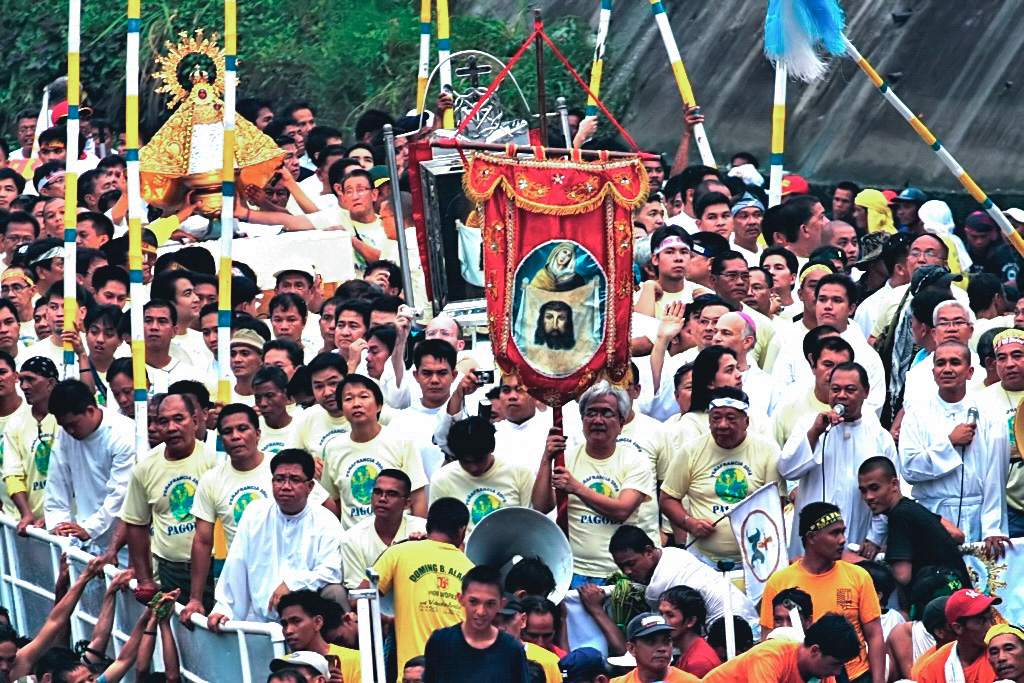
A tapestry of faith: Every September, millions of devotees gather for the fluvial procession along the Naga River, a spectacle that transforms the city into a sea of devotion. This event alone cements Naga’s status as a global religious tourism destination.
Colonial grandeur: As one of the original Spanish royal cities in the Philippines, Naga’s streets are lined with history — from the Quince Martires Monument to the Holy Rosary Minor Seminary.
Nature’s sanctuary: The city is a rare urban center that directly borders a protected national park, allowing travelers to move from modern commercial districts to pristine tropical rainforests in minutes.
The “Maogmang Lugar”: Naga is known as the “Happy Place” (An Maogmang Lugar), a testament to the warmth and resilience of its people, who invite tourists to experience their rich culinary heritage — including the famous spicy Bicol Express, pinangat, and ginataang gabi.
Gateway to adventure: Whether it is wakeboarding at the nearby CamSur Watersports Complex (CWC) or island-hopping in Caramoan, Naga is the indispensable hub for any traveler exploring the Bicol Peninsula.
The Peñafrancia Fluvial Procession
The Peñafrancia Fluvial Procession is the grand climax of the annual festivities in Naga City, marking the return of the miraculous image of Our Lady of Peñafrancia — affectionately called “Ina” — and the Divino Rostro (the Holy Face) to their home shrine.
Origin of the devotion and procession
The tradition began in the early 18th century, around 1710, when Fr. Miguel Robles de Covarrubias, a Spanish seminarian in Manila, attributed his recovery from several illnesses to the intercession of Our Lady of Peñafrancia.
The vow: In gratitude, he vowed to build a stone church in her honor along the banks of the Bicol River in Naga City.

The miracle: During the carving of the image, the blood of a sacrificed dog was reportedly used as red pigment after conventional paint ran out. Legend holds that when the dog’s body was cast into the river, it miraculously returned to life and swam back to its master, sparking intense devotion among the locals.
Institutionalization: The specific format of the nine-day novena culminating in a water-borne return — the Traslación por el río — was institutionalized by Bishop Francisco Gainza in 1864.
Why Naga City continuously observes the annual procession
The people of Naga and Bicolanos worldwide maintain this tradition primarily as the fulfillment of a communal vow (panata).
Gratitude and healing: Millions believe in the continued miraculous power of Ina for healing and protection.
Historical resilience: The devotion has survived typhoons, earthquakes, world wars, and even the theft of the original image in 1981.
Cultural identity: It has evolved beyond a purely religious rite into the “soul of Bicolandia” — a time for homecoming and regional unity.
Essence of the fluvial procession to believers
For Nagueños and Catholic believers, the procession along the Naga River is a “homecoming” for the Mother.
Spiritual climax: It represents the culmination of nine days of intense prayer and petition during the novena.
Total submission: The sight of the voyadores (male devotees) escorting the flower-laden pagoda is a physical manifestation of faith, humility, and collective sacrifice.
Unity and shared hope: As thousands wave white handkerchiefs and chant “Viva la Virgen!”, it serves as a powerful symbol that all believers — regardless of social status — are united as children under their “Ina.”
A 3-day journey: From sacred altars to hidden falls
Naga City can be beautifully experienced through a three-day journey that transitions from deep spiritual heritage to the refreshing embrace of nature. This itinerary presents the city not merely as a destination, but as a living narrative of faith and resilience.
Day 1: The pilgrimage of the heart
Begin at the Naga Metropolitan Cathedral, the historic seat of the Archdiocese of Caceres and the “mother of all churches” in Bicol. Walk through the iconic Porta Mariae, a neoclassical triumphal arch, to reach the Peñafrancia Basilica Minore, home to the miraculous image of “Ina,” the patroness of Bicol. Spend the afternoon at the Museo del Seminario Conciliar, where centuries-old artifacts tell the story of Naga’s role as a center of Catholic education in the Philippines.
Day 2: Into the emerald wilds
Trade cobblestones for forest trails at Mount Isarog National Park. A manageable trek through lush tropical forest leads to the 40-foot Malabsay Falls, where crystal-clear waters cascade into a deep emerald pool. For the more adventurous, a further 30-minute hike reveals Nabontolan Falls, a secluded gem surrounded by massive boulders and the tranquil sounds of the jungle.
Day 3: Serenity and sunset reflections
Find relaxation at the Panicuason Hot Spring Resort, soaking in therapeutic, mineral-rich pools nestled at the foothills of Mount Isarog. As the day winds down, make your way to the Camaligan River Park for a leisurely river cruise or a sunset stroll along the lit hanging bridge, sampling local street food such as the beloved kinalaro — and, above all, basking in the legendary warmth of the Bicolano people.
Author’s message to fellow Bicolanos
“As we look toward the horizon, the story of Naga City is far from finished — it is entering its most radiant chapter yet. To my fellow Bicolanos, let us take pride in knowing that our Maogmang Lugar has become a beacon for the entire nation: a true Role Model City defined by the gold standard of transparent good governance and the collective strength of its people. Naga stands today as a ‘City of Pilgrims, Hope and Dreams,’ proving that progress does not have to come at the cost of our heritage or our environment. The future of Naga lies in our hands — a future where innovation meets tradition, and where every pilgrim and traveler finds a home. Let us continue to build a city that does not merely grow, but flourishes with compassion, transparency, and a spirit as unshakeable as the mountains that guard our beautiful home. Viva la Virgen! Dios Mabalos, Naga!”
