





Most people who leave a stable job do so reluctantly, driven by necessity rather than ambition. Benjie Geronimo was no different — except that the life he built after that decision would take him to 52 countries and counting.

He was a licensed teacher and school administrator in the Philippines, shaping young minds in an elementary classroom in Bulacan from 2006 to 2008. Then, like hundreds of thousands of Filipinos before him, he packed his bags for Dubai — not because teaching failed him, but because his family needed more than a teacher’s salary could provide. “Salaries in the Philippines are much lower compared to what you can earn abroad,” he shares with TGFM. “It’s about providing for the family and creating a better future.”

Eighteen years later, Benjie, 41, holds the title of Office and Events Manager and Executive Assistant at the Khudairi Group, a Dubai-based conglomerate with interests across multiple business sectors. The arc of that journey — from bedspace bunk beds to boardroom-level coordination — is not a story of luck. It is a study in deliberate reinvention.
Starting over, one bunk at a time
When Benjie arrived in Dubai in 2008, his first job was in the hospitality industry at a five-star resort hotel. It was demanding, people-facing work, but it taught him how to read a room — a skill that would serve him well for the next two decades.
The early days were far from glamorous. Like many newly arrived OFWs, he shared cramped living quarters with multiple flatmates, sleeping on an upper bunk in a rented bedspace. “I overcame it by staying active, making friends, and getting involved in community events,” he recalls. “Never get stuck in your room — go out, enjoy life, laugh, and have fun.”
That mindset kept homesickness at bay and built something more durable: a network. The community he found in Dubai became his second family, and his circle of friends — carefully chosen, genuinely supportive — remains one of the things he credits most for his staying power abroad.
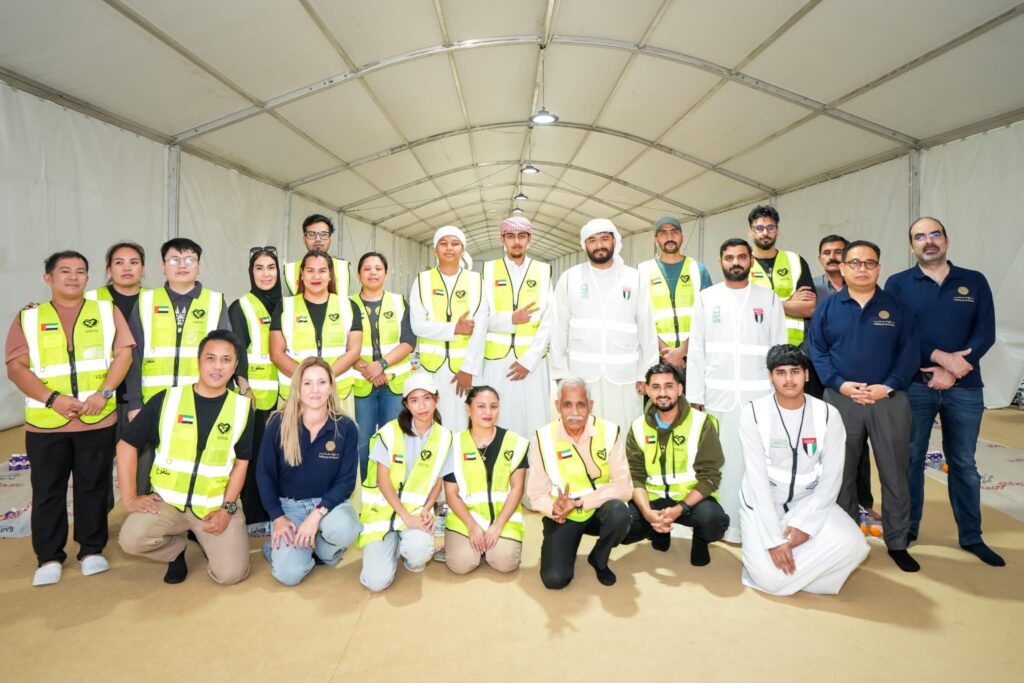
By 2013, he made a pivot from hospitality to the corporate world, starting as an Administrative Assistant. The transition was deliberate. His years hosting events and managing people had sharpened his organizational instincts, and he was ready to apply them in a more structured environment.

A teacher who never stopped teaching
What Benjie carried from the classroom was less about subject matter and more about people. “While sharing knowledge from books is important, shaping the personality and behavior of my students mattered even more,” he says, reflecting on his years as an educator. The moment students would spot him outside school and call him “Sir” — unprompted, in the middle of an ordinary day — reminded him of something he’d never quite forget: that how you treat people follows you.
That lesson echoes in how he describes his current workplace. At the Khudairi Group, what he values most isn’t the title or the perks — it’s the culture. “The most satisfying part of my work is the open-door communication with our bosses and colleagues. I feel heard and supported.” For someone who spent his formative professional years navigating the unpredictability of hospitality, that sense of psychological safety is not a given — it’s a priority.
The work itself suits him. Managing office operations, coordinating company events, supporting senior management — it draws on the same blend of people skills and logistical precision he has been honing since his first year in Dubai.
Fifty-two countries and a fight for fairness
If there’s a metric Benjie uses to measure a life well-lived, it might be the passport stamps. Fifty-two countries visited in 18 years abroad — a self-described reward for the long hours and sacrifices that came with being the family breadwinner. “I’ve had the chance to travel and see the world,” he says, “which has been an amazing way to treat myself and appreciate my hard work.”


But the bigger picture, for him, extends beyond personal milestones. One advocacy he speaks about with particular conviction is the fight against racial and gender discrimination. “I believe everyone should be treated equally and have the same opportunities, regardless of the passport they hold,” he says — the kind of statement that carries more weight when it comes from someone who has lived it firsthand.
As he looks toward life after overseas work, he plans to invest in property back in the Philippines and keep traveling. His advice to fellow OFWs is direct and unromanticized: “Be smart with your finances, work hard, save, and make sure your savings are bigger than your expenses whenever possible.” Then, almost in the same breath, he adds the counterweight that gives the counsel its texture — “don’t forget to live the life you love and never let anyone control your choices.”
