



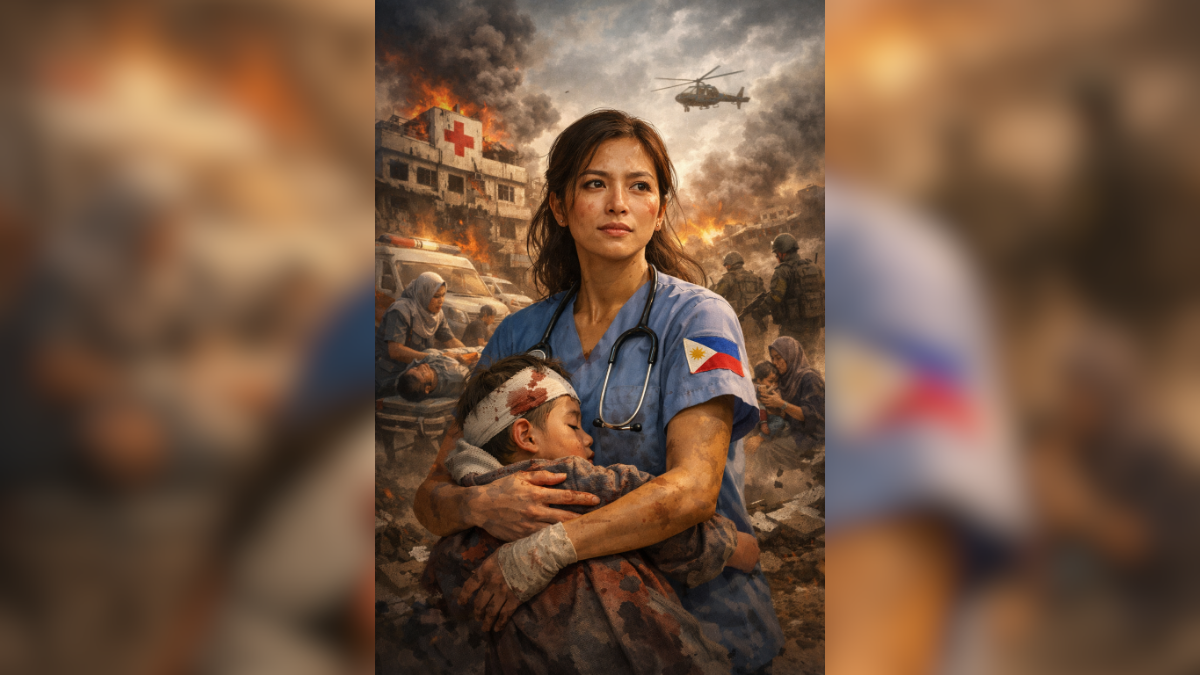

In every armed conflict, the world’s attention is drawn to power, politics, and destruction. We see headlines about territorial disputes, military strategies, and rising casualties. Yet, behind these narratives lies a quieter, often overlooked truth: amid the chaos of war, some choose not to fight, but to heal.

They are nurses.
Today, as tensions escalate across the Middle East, healthcare systems are once again being pushed to the brink. Hospitals operate under constant threat, resources dwindle, and the wounded arrive in numbers that overwhelm even the most prepared facilities. In these fragile spaces, nurses stand at the frontline-not as combatants, but as protectors of life.
Nursing in armed conflict is not simply an extension of hospital care; it is a profound act of courage. It demands clinical expertise under pressure, ethical clarity in uncertainty, and emotional strength in the face of suffering. Nurses treat injuries caused by violence, comfort families torn apart by loss, and provide stability in environments where nothing feels certain.
But what makes this reality even more compelling-and deeply personal for us as Filipinos -is the presence of our own nurses in these conflict zones.
For decades, Filipino nurses have been a cornerstone of the global healthcare workforce. From Saudi Arabia to the United Arab Emirates, Oman,Bharain and from Qatar to Kuwait, they serve in hospitals, clinics, and communities far from home. Their reputation for competence, compassion, and resilience has made them indispensable across the Middle East.
Yet today, many of these same nurses find themselves working under the shadow of conflict.
They care for patients while hearing the distant echoes of airstrikes. They report for duty not knowing whether the journey to and from work is safe. They continue to serve even as communication with their families back home becomes uncertain. And perhaps most strikingly, they do all of this while carrying the weight of responsibility-not only to their patients, but to the loved ones who depend on them.
This is the dual reality of the Filipino migrant nurse: a professional bound by duty, and a human being tethered by sacrifice.
Their decision to stay and serve, even in dangerous conditions, is not always driven by choice alone. Economic realities, family obligations, and contractual limitations often shape their circumstances. Leaving a conflict zone is not as simple as walking away; for many, it means risking financial stability and the well-being of those they support.
And yet, despite these challenges, they remain.
They remain because nursing, at its core, is not just a profession; it is a commitment to humanity. Filipino nurses embody this commitment through deeply rooted cultural values: malasakit, a genuine compassion for others; bayanihan, a spirit of collective support; and an enduring sense of responsibility to care, no matter the circumstances.
In refugee camps, emergency wards, and makeshift clinics, these values come to life. Filipino nurses become not only caregivers but sources of comfort and hope. They bridge cultural divides, offer emotional reassurance, and restore dignity to those who have lost so much.
However, their courage should not come at the cost of their safety.
One of the most alarming realities in modern warfare is the increasing disregard for medical neutrality, the principle that healthcare workers and facilities must be protected at all times. Reports of attacks on hospitals and healthcare personnel are no longer isolated incidents; they are part of a disturbing pattern.

When a hospital is bombed, it is not just a building that is destroyed, it is a lifeline. When a nurse is harmed, it is not just a professional loss, it is a community deprived of care.
This is why the protection of nurses must be a global priority.
Governments, international organizations, and healthcare institutions must work together to ensure that nurses in conflict zones are safeguarded. This includes enforcing international humanitarian laws, providing clear evacuation protocols, offering mental health support, and recognizing the unique vulnerabilities of migrant healthcare workers.
For Filipino nurses, this protection must also come from home. Stronger policies, coordinated diplomatic efforts, and responsive support systems are essential to ensure that our healthcare professionals abroad are not left to negotiate these dangers alone.
But beyond policies and protections, there is also a need for recognition.
Too often, the contributions of nurses in conflict zones remain invisible. Their stories are not always told, their sacrifices not always acknowledged. Yet, they are the ones who hold the fragile line between life and death, between despair and hope.
They are the quiet heroes of war.
As we reflect on the current situation in the Middle East, we must shift our perspective. War is not only about destruction but also about resilience. And within that resilience are nurses who choose, every single day, to care in the face of fear.
For Filipino migrant nurses, this reality is both a source of pride and a call for support. They represent the best of what our profession-and our nation-has to offer. But they also remind us of the responsibility we carry to protect those who care for others.
In the end, the measure of humanity in times of conflict is not found in how wars are fought, but in how lives are preserved.
And in that measure, nurses stand at the very center.
They do not carry weapons.
They carry compassion.
They do not destroy.
They heal.
And in a world too often defined by conflict, that makes all the difference.
