



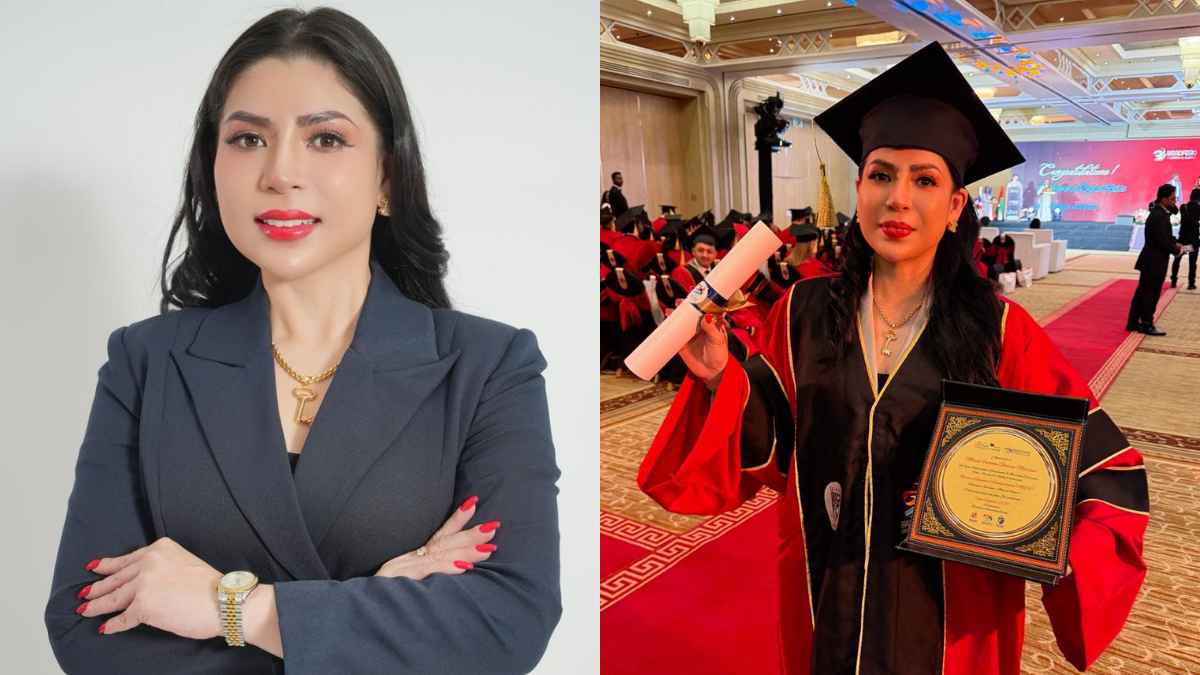

Some people leave everything behind and still come home with more than they started with — not in spite of the hardship, but because of it.

Maria Fatima Garcia Mariano was sixteen years old when a single moment split her life into a before and an after. She did not run from it. She carried it — her newborn daughter in one arm and whatever remained of her ambitions in the other — and began, quietly and stubbornly, to rebuild.
Today, she is an MBA graduate, a marketing professional at a UAE building materials company, a licensed real estate broker, the founder of a growing bag and luxury goods business, and the host of a Bible study group that has become a refuge for overseas Filipino workers far from home. She is also, as she is quick to point out, still very much a work in progress.
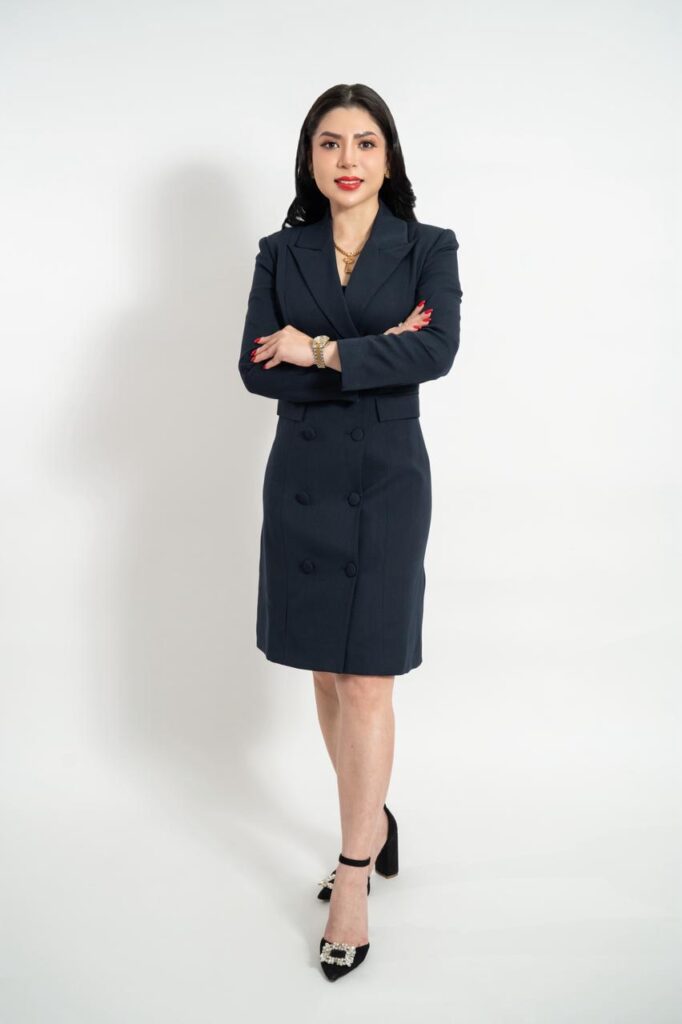
“Your starting point does not define your destination,” she says, and in her case, the distance between the two has been considerable.
From Divisoria to Dubai: a journey built on necessity
The entrepreneurial instinct was always there. Long before she knew what branding or market penetration meant, Maria Fatima was hauling bayong bags stuffed with accessories and knick-knacks to church bazaars and school fairs, buying wholesale from Divisoria and selling retail to anyone who would stop and look. Business, for her, was never a career plan. It was just what you did when you needed to.
That necessity only deepened after she became a mother. Determined not to let her circumstances become excuses, she enrolled in a marketing degree as a working student, simultaneously taking on a job with one of the Philippines’ major real estate developers. What started as a way to get by became a career. Over the next fifteen years, she built herself into a licensed real estate broker, her commissions putting food on the table and eventually funding her daughter’s education.
The UAE chapter began almost by accident. During the post-pandemic recovery period, her real estate company sent a team to Dubai for a roadshow — an event targeting overseas Filipino investors. It was her first exposure to the Gulf, and it did not go the way she had hoped. She did not hit her sales quota. Her contract was not renewed.
Her teammate at the time — now her husband — suggested they stay. There was more to write here, they reasoned. What followed, she describes as “one of the most difficult seasons” of her life.
For nearly a year, she applied for jobs across the UAE and was repeatedly let down. Some companies interviewed her and disappeared. Others offered contracts but never processed her visa — a situation she would discover had been misused. She was defrauded four times by employers who took her documents and gave nothing in return. To save on transportation to job interviews, she walked kilometers through Dubai’s summer heat, sometimes sitting in metro stations afterward in tears.
“There were days when I walked kilometres just to attend job interviews because I wanted to save on transportation costs,” she recalls. “I remember sitting in metro stations after interviews, sometimes in tears, wondering when my breakthrough would come.”
The breakthrough came in the form of Graniti Building Materials — a Dubai company whose owner is married to a Filipina, and where, she says, the culture felt like family from the start. For the first time since arriving in the UAE, she had stability. And from that stability, she began to build.
Two bags and a business plan she didn’t know she had
The bag business began with a personal reward — the kind most OFWs understand instinctively. After two years of working in the UAE without returning home, Maria Fatima received a month’s salary advance, bought pasalubong for her family, gave her tithes, and decided, perhaps for the first time in her adult life, to buy something for herself.
She was looking for a Coach bag online when she found a supplier in Dubai and decided to visit the shop in person. The quality was better than expected. The prices were reasonable. And then, standing in that store, the old instincts kicked in.
“I asked the staff a simple question: Is it possible for me to do live selling here?” she says. “To my surprise, they said yes.”
She walked out with two bags instead of one. That evening, she told herself — in the particular Tagalog shorthand that carries both gratitude and disbelief — Grabe talaga si Lord. She had expected a gift for herself. She had found a livelihood.
Once or twice a week, after her full-time shifts at Graniti, she would take the metro to her supplier’s location and host live selling sessions. The audience grew. Fellow Filipinas in the UAE, many of them working long hours for modest wages, appreciated being able to access branded bags at prices that didn’t require a month’s salary. She understood that impulse deeply.
Over time, she began to sense that it was the right moment to take the next step. Building her own brand and supply chain felt like a natural progression — not a departure, but a growth. The foundation her early supplier gave her remained something she carried with gratitude.
“My intention was never to create competition or negativity,” she says. “I remain deeply grateful to them. But as entrepreneurs, we also grow and learn.”
She and her husband began building their own brand and supply chain — gradually, carefully, without burning bridges. Today, their market spans the UAE and broader Gulf region, including Oman, Qatar, Kuwait, Saudi Arabia, and Bahrain, as well as customers in the United States. Their offerings have expanded to include luxury bag consignment, branded jewelry, and watches — a curated resale market that she describes as making luxury “more sustainable, meaningful, and shared.”

An MBA, a marketplace, and the discipline of doing both at once
It was the field that pushed her toward the classroom. Working in building materials meant constant exposure to C-suite executives, property developers, interior designers, and project consultants. Maria Fatima maintained an average of around 90 to 100 professional collaborations per year — presentations, office visits, project discussions — and the gap between where she was and where she wanted to be started to feel urgent.
“Being out in the field pushed me to enhance myself even further,” she says. “I wanted to grow, become more refined in my professional approach, and add greater value to the company I work for.”
She enrolled in an MBA programme in Sales and Marketing Management while continuing her full-time role and running the bag business with her husband. The practicalities were considerable: sleepless nights, early classes, and the financial pressure of tuition fees that required her to negotiate flexible payment terms with the university. The small business, which had started generating extra income, helped offset the costs.
“Balancing work, graduate studies, and our small family business was not easy,” she admits. “But I kept telling myself: if not now, when?”
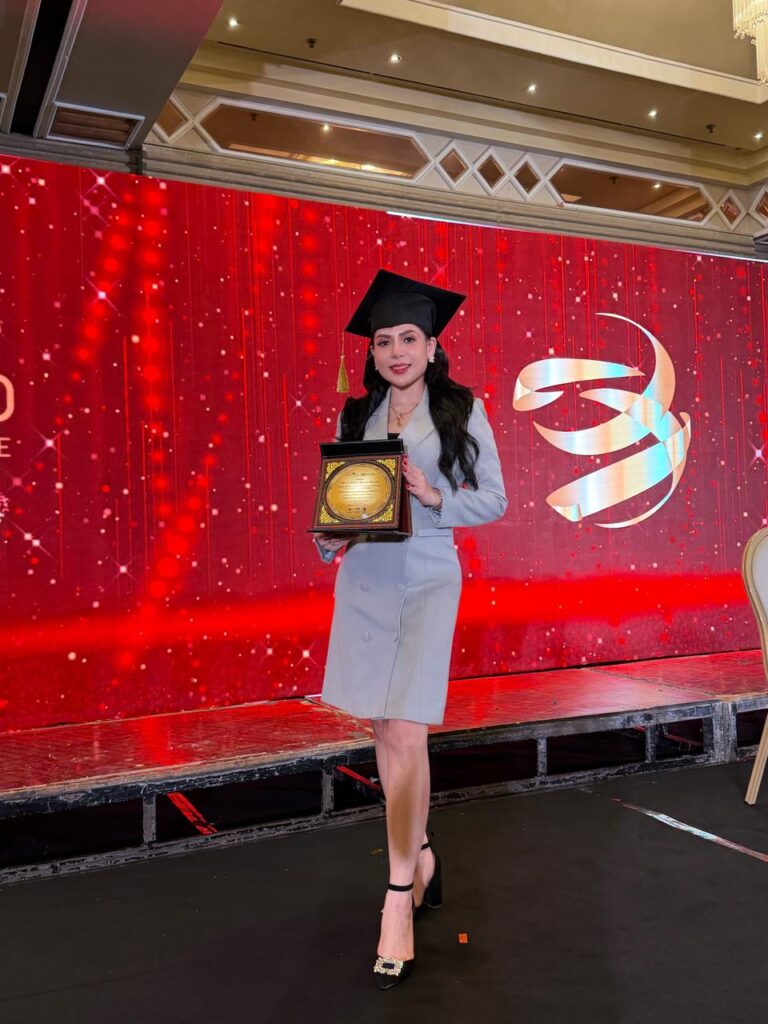
In November 2025, she graduated. The milestone did not make headlines outside her own circle, but for a woman who became a mother at sixteen and rebuilt her life around that responsibility, it carried a weight that a title alone cannot fully explain.
“Education, for me, was never just about a title,” she says simply. “It was about growth.”
A home that becomes a gathering place
Twice a month, her small apartment fills up. Worship songs, shared meals, spoken prayers, and — occasionally — tears. The Bible study group she hosts has grown into something she describes as genuinely necessary, not just spiritually but emotionally, for OFWs who carry invisible burdens abroad.
“As OFWs, we are often vulnerable to loneliness, pressure, and many temptations that come with being far from home,” she says. “We do not gather because we think we are perfect or holy. On the contrary, we gather because we recognize how much we need God in our lives.”
The group is guided by teachers from the United Pentecostal Church in Dubai. Within it, she has witnessed what she calls answered prayers — restored relationships, provisions that came through at the last moment, personal breakthroughs that gave people reason to keep going.
Her community work extends beyond the apartment. Through her e-commerce platforms, she actively mentors aspiring entrepreneurs — particularly OFWs who want to start small businesses but don’t know where to begin. Drop shipping, she explains, is one of the most accessible entry points: it requires minimal capital, no warehouse, and can be run in the hours between a day job and dinner.
She has also become a trusted voice for OFWs — in the Gulf and in the United States — on the subject of property investment back home. Her guidance centres on starting a real estate portfolio in the Philippines while working abroad: making financial decisions that build long-term security rather than just sustaining the present.
What she hopes people take away
There is a particular kind of advice that feels hollow from people who haven’t paid for it. Maria Fatima’s advice does not fall into that category. When she tells aspiring entrepreneurs to start small but think big, or when she says that the right relationships matter more than start-up capital, she is drawing from specific, lived experience — from the metro rides she took to save carfare, from the supplier who let her start with nothing but a camera and a platform, from the university that allowed her to pay her fees in installments.
“Instead of only praying to become wealthy, I always encourage people to pray for three things: vision, relationships, and humility,” she says. “When a person remains humble, patient, and willing to serve others, God has a way of lifting them up at the right time.”
She is careful, though, not to make it sound easier than it was. Behind every business, she notes, are sleepless nights and the kind of exhaustion that social media timelines don’t capture. She ran customer service, marketing, accounting, and operations herself in the early months. There is no shortcut she is aware of that she hasn’t already tried and found wanting.
Her long-term ambitions have a specific shape. She wants to help build a church for the United Pentecostal Church in Tayuman — a goal that functions for her as both a prayer and a financial target, something that keeps her grounded about why she is building wealth in the first place.
“My desire to succeed comes from a deeper purpose: to help more people and to give more,” she says. “The blessings we receive in life are not only meant for ourselves — they are meant to bless others as well.”
She pauses when asked what she hopes people take from her story, and when she answers, it is with the kind of directness that comes from having thought about something for a long time.
“I hope to be remembered not just as an entrepreneur, but as a Christian businesswoman — someone whose success is deeply rooted in faith.”
For a sixteen-year-old who once stood in a metro station in tears, wondering when her break would come, that is not a small thing to have become.
