




A surge in global oil prices is reshaping the cost of travel across the Philippines, with transport regulators moving on multiple fronts to manage the fallout for commuters and air passengers.

The Civil Aviation Authority of the Philippines is weighing a reduction in passenger service charges at the 77 airports under its management, with the agency’s board deliberating on cuts ranging from P50 to P200 per airport. Deputy Director General Danjun Lucas told The Philippine Star the reduction is still pending approval. “Subject to board approval, this will be applied to all CAAP-operated airports. We are looking at P50 to P200 depending on the airport, but no approval yet,” he said.
The move is being pushed by the Department of Transportation, which has acknowledged it has little leverage over how carriers set airfares as jet fuel costs climb sharply. Data from the International Air Transport Association cited by The Philippine Star shows jet fuel prices surged 58 percent week-on-week to $157.41 per barrel as of March 6, up from $99.4 a barrel on February 27. The spike is being attributed to supply disruptions tied to the Middle East conflict.
Dubai crude oil was trading at $127.86 per barrel as of last week, a price level that is expected to drive fare increases across land, air, and sea transport.
Transportation Secretary Lopez also directed the Civil Aeronautics Board to cut its fuel surcharge evaluation period from 30 days to 15, allowing fare adjustments to take effect more quickly. The CAB has held the fuel surcharge at Level 4 since August 2025 — enabling airlines to collect between P117 and P342 on domestic routes and P385.70 to P2,867.82 on international flights depending on distance — but a revision is expected in April. Lopez separately instructed CAAP to explore reducing airline service fees as a way to give carriers room to limit passenger fare increases ahead of Holy Week.

Cathay Pacific has already imposed a fuel surcharge of P386 on flights connecting Hong Kong with the Philippines and several other countries.
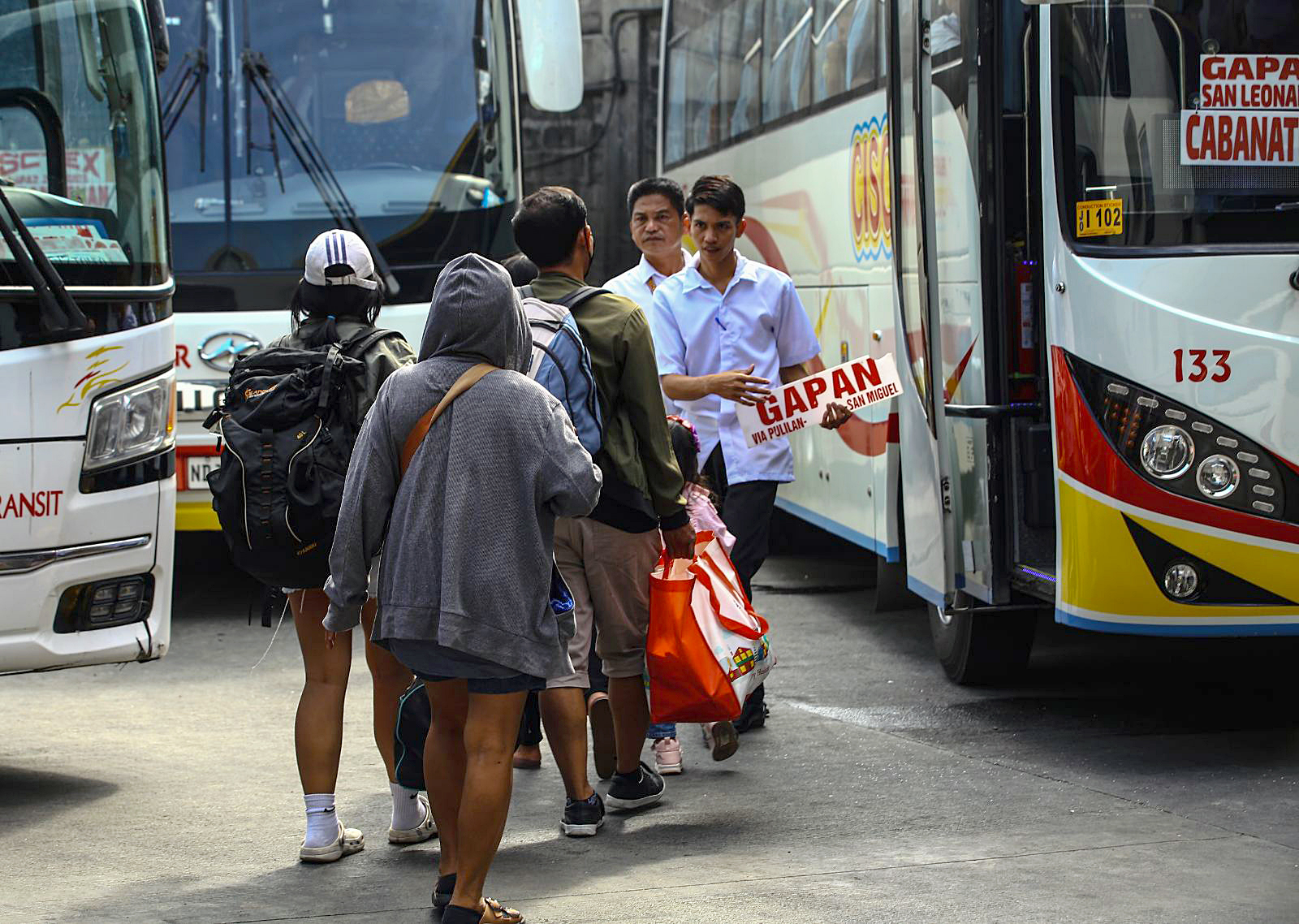
On the ground, the Land Transportation Franchising and Regulatory Board approved a provisional fare increase for provincial buses effective March 14. Under the new rates, ordinary provincial buses will charge a base fare of P1.00 with an additional P0.30 per succeeding kilometer. Deluxe and super deluxe buses are now set at P0.35 per kilometer, while luxury buses were adjusted to P0.45 per kilometer.
The LTFRB reminded operators to post updated fare guides inside their vehicles. “Passengers are likewise encouraged to verify the correct fares based on the official Fare Guide and report any violations or overcharging incidents to the LTFRB through its official communication channels,” the agency said.
Separate fare adjustments for jeepneys and city buses — where operators are seeking a P2 increase — are set to be announced on March 17, while hikes for taxis and UV Express units are still pending public hearings and a nationwide consultation process.
In the legislature, Gabriela Silang Representative Ching Bernos has called on the government to revive the Libreng Sakay program alongside fuel excise tax cuts and driver subsidies. Bernos noted that the DOTr has indicated the 2026 national budget carries a P1-billion allocation for the Service Contracting Program, through which the agency can enter agreements with transport cooperatives and operators for subsidized service delivery.
