



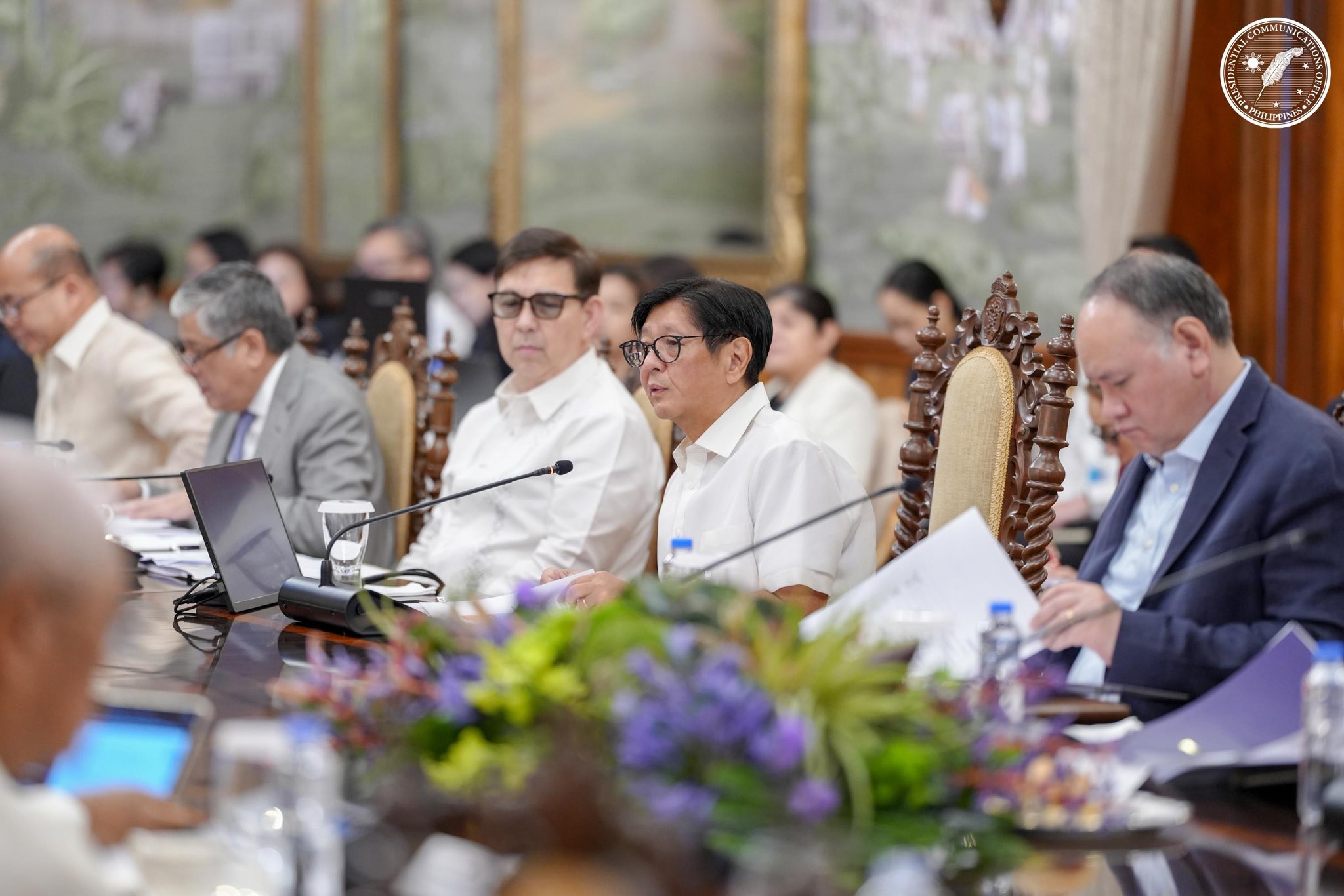

President Ferdinand Marcos Jr. on Tuesday emphasized that protecting Filipino lives remains the government’s overriding priority as more than 1,000 nationals in the Middle East await possible evacuation amid escalating hostilities.

“We will find ways to get you out safety… Right now, it’s safety first for our people,” Marcos said during a press briefing at Malacañang, underscoring that any repatriation effort will proceed only when conditions allow it to be carried out without exposing civilians to further danger.
According to the President, current security assessments show that neither air nor land routes can be used safely at this time. Airports in affected areas are closed, and portions of regional airspace have effectively become battle zones, making it impossible to deploy aircraft even if available.
“The situation is very fluid. Our assessment is that it’s too dangerous to fly, even if we could. There’s nothing we can do because airports are closed. This [airspace] is a combat area,” he said in a mix of English and Filipino.
Marcos also noted that ground travel poses serious risks due to ongoing strikes. While land evacuation may eventually become the most viable option, he said it remains unsafe under present circumstances.

He cited a recent incident in which three American fighter jets were accidentally shot down over Kuwait, though their crew members were able to eject safely. The episode, he said, illustrated how unpredictable and hazardous operations can be within an active conflict zone.
Filipinos in affected countries have been advised to remain where they are and follow instructions from local authorities while the Philippine government monitors developments. At least one Filipino has been confirmed dead since the outbreak of violence.
The clashes began on February 28, when the United States and Israel launched attacks on Iran, which Washington described as an “overwhelming military campaign to eliminate the imminent nuclear threat posed by the Iranian regime, destroy its ballistic missile arsenal, degrade its proxy terror networks, and cripple its naval forces.” Iran, later joined by Hezbollah, responded with strikes targeting Israel and several Gulf states that host American bases.
Marcos said government assets are being readied so they can be mobilized immediately once a safe “window” opens for extraction. Embassies across the region have activated hotlines, and quick response teams are operating around the clock to assist Filipinos on the ground.
In the same briefing, the President said the country currently maintains a 50- to 60-day supply of oil as authorities prepare contingencies should the conflict persist.
