



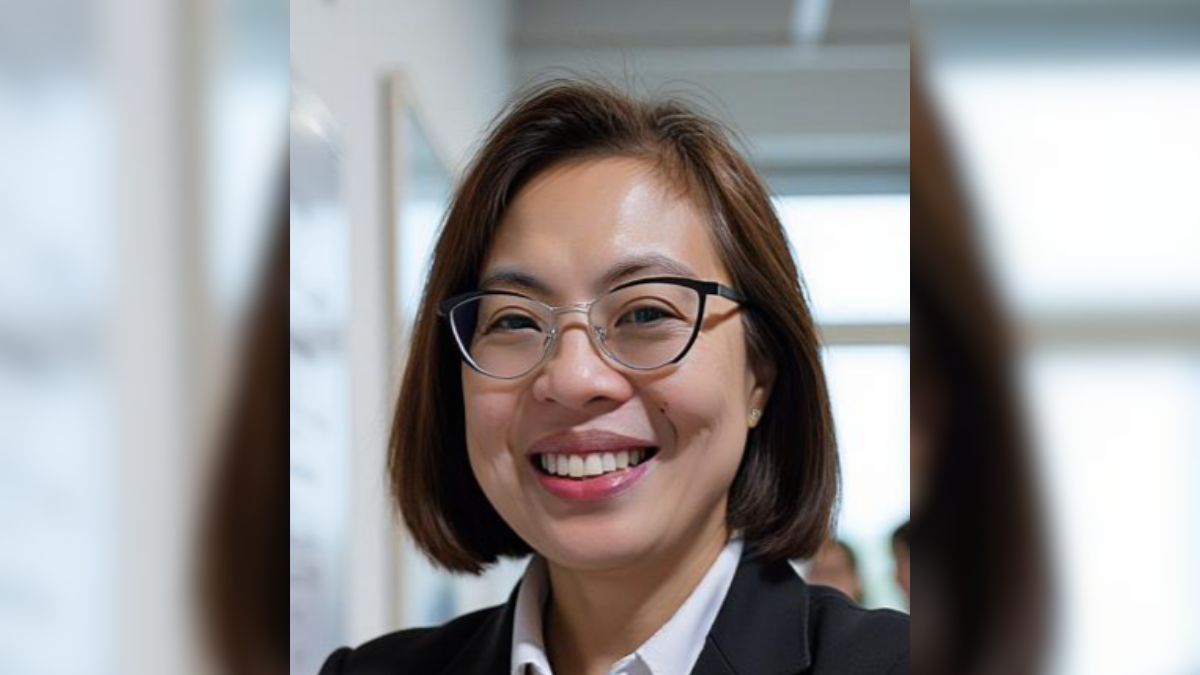

At first glance, Mary Jane Genuino looks like any dedicated nursing professor-calm, focused, and deeply engaged with her students. But behind her gentle presence is a powerful life story shaped by courage, sacrifice, and resilience. Her journey from Manila to the United States, from bedside nursing to academic leadership, reflects the shared story of many Filipino nurses who leave home not just to build careers but to serve families, communities, and humanity itself.

Mary Jane is 55 years old and originally from Manila, Philippines. She has been a nurse for nearly four decades, practicing across different roles and settings in the United States. Today, she serves as an Assistant Professor at William Paterson University in New Jersey, teaching future nurses not only clinical skills, but also compassion, ethics, and resilience. Her life reminds us that success is rarely loud; it is built through consistency, sacrifice, and purpose.
A Dream That Changed Direction
Mary Jane did not originally dream of becoming a nurse. At just sixteen years old, she entered college planning to become a lawyer or journalist. She loved writing, social issues, and advocacy. Nursing was not part of her plan-until one meaningful conversation changed everything.
During a visit to the historic EDSA Revolution, a family friend spoke honestly about the struggles many Filipinos face and the opportunities that working abroad could offer. She shared that nursing was not only a stable profession but also a powerful way to serve others globally. At that moment, Mary Jane’s perspective shifted. She came to view nursing as a profession grounded in service, resilience, and global significance rather than solely as a practical career option. Mary Jane graduated from nursing school at just 20 years old. While waiting to take her board exams and reach the legal working age, she volunteered at a local hospital in Novaliches. Soon after, she began her first nursing job at Capitol Medical Center in Quezon City, working in a demanding step-down ventilator unit.
Those early years were not easy. She worked night shifts and attended CGFNS review classes during the day. Exhaustion was constant. She recalls falling asleep on buses and missing her stop more than once. Still, she kept going. Her determination paid off—she passed the CGFNS exam on her first attempt and soon left the Philippines to begin her nursing career in the United States.
Starting Over Abroad
Mary Jane’s first overseas job was in a nursing home in New Jersey. She arrived in the U.S. with just $500, no relatives, and no safety net. Unlike many of her peers, she had no family to rely on for support. On top of adjusting to a new country, she and her fellow nurses were required to pass the state board exam to remain employed. The pressure was intense.
At the same time, she carried heavy responsibilities back home. Her father had just suffered a major heart attack, and her youngest brother was about to enter college. Leaving the Philippines meant choosing between presence and provision, and she chose to help her family survive.
The emotional cost of migration became painfully clear during her first Christmas away from home. While performing wound care on an elderly patient, a Christmas song played on the radio. Overcome with homesickness, she quietly cried behind the curtain. A nursing aide noticed and called the director, who gently asked, “Is this your first Christmas away from your family?”
That moment captured what many Filipino nurses experience but rarely say out loud: migration is not just about opportunity, it is about absence, longing, and quiet strength.
Growing Into Leadership and Education
Over time, Mary Jane’s career expanded. She spent 15 years in acute care, working in neurological step-down and ventilator units. She also gained experience in long-term care and hospital education roles. In 2003, she discovered a new passion, teaching.
Her journey into academia began in 2003, when she started as a clinical instructor at a small college educating Licensed Practical Nurses. It was during these early teaching experiences that she discovered a deep passion for education-one that would ultimately define her professional path. Inspired by this calling, she pursued a master’s degree in nursing while working full-time at Berkeley College. At the same time, she remained actively engaged in clinical practice as a staff nurse at Valley Hospital in New Jersey through the Baylor Program, working three weekends each month. Balancing academic responsibilities with bedside nursing allowed her to stay clinically grounded while preparing the next generation of nurses. After several years, she transitioned from a full-time faculty role to an adjunct position and accepted a full-time role as an Educational Specialist in a hospital setting. This shift required her to step away from bedside nursing and the Baylor Program, enabling her to focus on staff education and professional development. Shortly thereafter, she was offered the position of Chair of the Nursing Program at Berkeley College, where she oversaw both the Practical Nursing and Bachelor of Science in Nursing programs. She accepted the role and stepped away from her hospital-based position to fully dedicate herself to academic leadership, curriculum development, and program excellence.
. To strengthen her teaching, she pursued advanced education, eventually earning:
- BSN – Chinese General Hospital Colleges (Philippines)
- MSN – Regis University (Denver, Colorado)
- Post-Master’s Certificate (Adult-Gerontology Primary Care NP) – William Paterson University
- Doctor of Nursing Practice (DNP) – Rutgers University–Newark, NJ
Balancing work, study, and family was never easy, but Mary Jane believed deeply in finishing what she started-a lesson shaped by her mother’s life.
Her mother had completed six years of medical school but gave up her dream to raise a family. Though never spoken aloud, Mary Jane sensed the quiet regret. That experience taught her a lifelong lesson: education is a privilege, and finishing is a form of respect for oneself and for those who sacrificed before us.
Facing Bias with Grace
Like many Filipino nurses abroad, Mary Jane faced subtle discrimination, especially early in her career. Some patients questioned her age or told her to “go back home.” One even told her to “go back to China.” Many of these comments came from elderly or cognitively impaired patients, and she responded professionally and with understanding.
Among colleagues, bias appeared quietly-through closer scrutiny or unspoken assumptions. Instead of confronting these moments aggressively, Mary Jane chose a different approach. She focused on consistency, competence, and professionalism. Over time, trust replaced doubt. Her work spoke louder than any stereotype. These experiences shaped how she teaches today. She reminds her students, especially immigrant nurses, that confidence, preparation, and resilience are powerful tools.

Nursing Through Grief: The COVID-19 Turning Point
The most defining chapter of Mary Jane’s career came during the COVID-19 pandemic. At the time, she was already established in academia. When her husband was hospitalized with COVID-19, she returned to bedside nursing so she could be closer to him. Tragically, he passed away before she was able to start. Two weeks later-still grieving-she began caring for COVID patients while continuing to teach.
She witnessed nurses facing moral distress, forced to make impossible decisions under rapidly changing conditions. She felt the emotional weight of nursing during a global crisis, not just as a professional, but as a grieving wife.
This experience became the foundation of her research, which focused on the moral distress of critical care nurses during COVID-19. It also transformed her teaching philosophy.
She developed an innovative teaching model that combines Gagné’s Instructional Design with Watson’s Theory of Human Caring, strengthening clinical judgment while intentionally cultivating compassion. Her work has been presented at conferences and continues to shape her scholarly path.
Strength Beyond the Classroom
Mary Jane’s resilience extends beyond her career. She is the mother of an adult daughter who is non-verbal with autism, requiring lifelong advocacy and care. Two years after losing her husband, her mother was diagnosed with Alzheimer’s disease, making Mary Jane her sole caregiver.
Instead of pulling her away from nursing, these responsibilities deepened her commitment. They shaped how she mentors students who are balancing life, loss, and learning.
Her guiding values remain constant: compassion, integrity, accountability, and respect.
Recognition, Awards, and Fellowships
Her dedication to nursing education and leadership has been recognized at both state and national levels. In 2025, she was inducted as a Fellow of the Society of Internationally Educated Nurses in North America (FSIEN)-a distinction that honors internationally educated nurses who demonstrate excellence, leadership, and sustained contributions to the profession. That same year, she received the Nursing Excellence Award from the Philippine Nurses Association of New Jersey (PNANJ), highlighting her commitment to advancing nursing practice and education within the Filipino nursing community. In 2024, she was named a national award recipient in the Foundations of Nursing Practice category by the American Nurses Association (ANA)-one of the highest recognitions in the nursing profession in the United States. Her leadership in clinical education was further recognized in 2023 with the DAISY Leadership Award for Clinical Education from the New Jersey League for Nursing and the Institute of Nursing C.A.R.E.S. Award for Education from the New Jersey State Nurses Association. That same year, she was also honored as Nurse Educator of the Year by the Philippine Nurses Association of New Jersey. Earlier, in 2022, she received the Nurse Recognition Award from the New Jersey League for Nursing, further affirming her sustained excellence in nursing education and professional service. Together, these honors reflect a career defined not only by academic leadership and clinical expertise but also by a deep commitment to mentorship, advocacy, and advancing nursing as a profession.
Giving Back and Leaving a Legacy
Mary Jane believes her greatest contribution to nursing lies in education, leadership, and storytelling. She has authored:
- A children’s book about a Filipino nurse migrating to the U.S., promoting early representation
- A self-published book, Tasting Echoes and Savoring Memories, combining nurses’ stories of loss with meaningful recipes
She also serves in leadership roles with professional organizations, mentoring Filipino and internationally educated nurses through advocacy, research, and education.
A Message to Future Filipino Nurses
To aspiring Filipino nurses, Mary Jane offers simple but powerful advice:
Prepare well. Take your education seriously. Let your work speak for itself. Carry your values with you-and never forget where you come from.
Her story reminds us that nursing is not just a profession. For many Filipinos, it is a bridge between home and hope, sacrifice and service, loss and meaning.
And sometimes, the quietest journeys leave the strongest legacy.
