



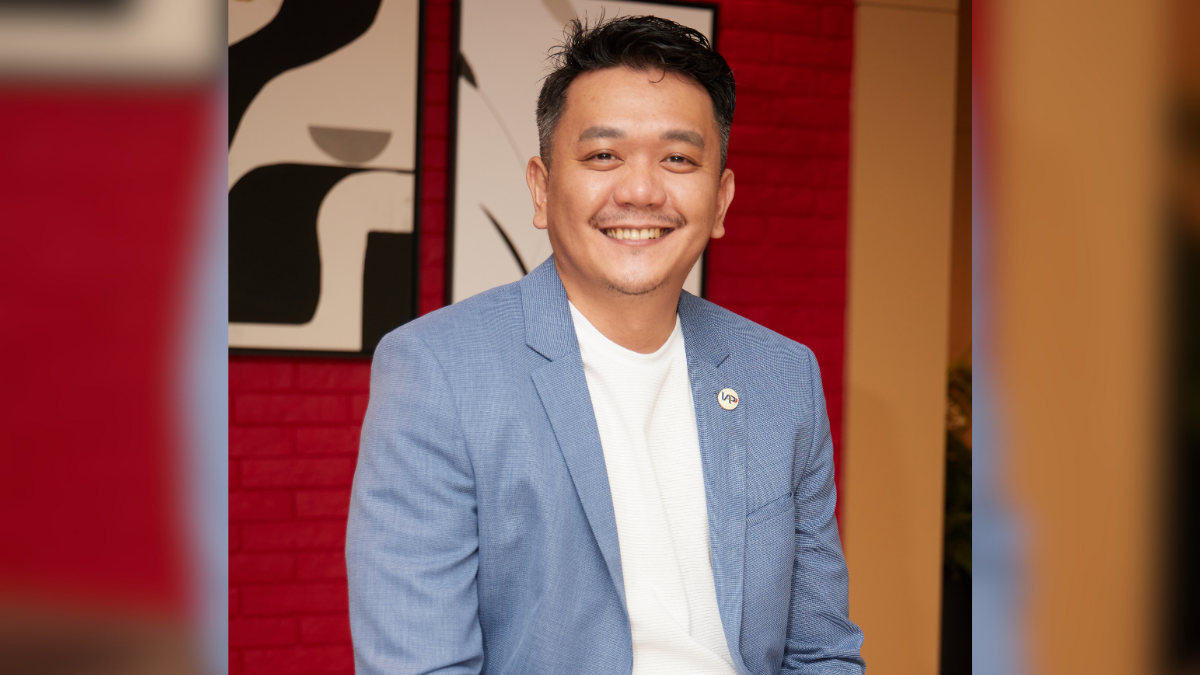

For many professionals working overseas, there comes a moment when the long hours and quiet compromises start to feel heavier than the ambition that once fueled them. Christian Romulo Vasquez reached that moment not by stepping back, but by stepping forward—into leadership, visibility, and a larger sense of responsibility that would reshape both his career and the way Filipino architects are seen in the Middle East.

Today, Vasquez is a senior project architect and business development executive at Dubai-based National Engineering Bureau, where he leads a team of more than 160 architects and designers. His name is attached to some of the region’s most recognizable developments, from supertall towers to luxury hospitality projects. But the real shift in his story is not about scale or height. It is about presence—about refusing to stay in the background of an industry that often underestimates where Filipino talent belongs.
From learning the craft to shaping cities
Vasquez’s architectural grounding began in Manila, where he earned his degree from Far Eastern University and entered professional practice at Palafox Associates. Working under urban planner Felino Palafox Jr. shaped his early understanding of architecture not as isolated buildings, but as part of living cities. That foundation would follow him to the Middle East, where rapid growth demanded both speed and foresight.
Over two decades, his work has spanned large-scale masterplans, iconic towers, resorts, and hotels. Among the most prominent are Marina 101, which upon completion stood as the second tallest building in the UAE, the Flame Tower designed by Carlos Ott, and hospitality developments such as Intercontinental Fujairah Hotel and Resort, Crowne Plaza Dubai Marina, and Hilton DoubleTree JBR.
Yet Vasquez is careful not to frame success purely in terms of landmarks. What mattered more, he explains, was understanding systems—how teams operate, how decisions are made, and how credibility is built in a highly competitive environment. That perspective eventually pulled him into leadership roles that went beyond design.
“I began to realize that my responsibility wasn’t only to deliver projects,” he says, “but to help shape how our profession is valued, and who gets trusted to lead.”
Claiming space at the global table
That realization led Vasquez into spaces few Filipinos had occupied before. He became the first Filipino and UAE representative on the board of the Council on Tall Buildings and Urban Habitat, contributing to global conversations on high-rise design and sustainable urban development. He is also the only Filipino serving as a board director at the American Institute of Architects Middle East.
These appointments were not symbolic. They placed Vasquez in rooms where policy, standards, and future directions are discussed—rooms where Filipino professionals had rarely been visible. For him, representation was not about personal distinction, but about correcting a long-standing imbalance.
“For many years, Filipino architects were present in Dubai, but often invisible,” he says. “We were doing the work, but not being seen as leaders.”
His advocacy was direct. Vasquez spoke to CEOs, design directors, and industry heads, challenging assumptions about capability and leadership. He encouraged Filipino architects to move beyond support roles and step into positions that matched their training and experience. The message was consistent: excellence alone is not enough if it remains hidden.
Redefining leadership within the community

In 2018, Vasquez took on the presidency of the United Architects of the Philippines Dubai Chapter, a role that allowed him to translate advocacy into structure. Under his leadership, the organization strengthened its presence in the UAE, creating platforms for professional development, collaboration, and visibility.
The impact was tangible. Filipino architects gained stronger networks, clearer pathways to leadership, and a collective voice in a crowded international market. Younger professionals, in particular, found mentorship and encouragement at a stage when confidence can be fragile.
“Leadership is not about titles,” Vasquez says. “It’s about making sure others are equipped to move forward when opportunities appear.”
His work also helped shift how Filipino architects saw themselves. Rather than accepting limited expectations, many began to imagine careers defined by influence, not just output. Several professionals have since credited Vasquez’s example for giving them the confidence to pursue promotions, lead teams, or represent their firms publicly.
Beyond buildings: giving back with intention
Vasquez’s sense of responsibility extends beyond the profession. In 2010, he founded Architect Gives Back, a charitable initiative supporting underprivileged Filipino children, particularly in access to education. The work is quiet and sustained, mirroring his belief that impact does not always need an audience.
He is also known outside architecture as a meticulous hotel reviewer, having evaluated more than 126 hotels worldwide. While seemingly unrelated, the habit reflects his attention to experience—how spaces function, how people feel within them, and how design choices affect everyday life.
Sustainability has remained a constant thread. Accredited as a LEED professional since 2009, Vasquez has consistently advocated for responsible design, not as a trend, but as an ethical obligation. For him, building cities carries long-term consequences that architects must be willing to own.
A career shaped by purpose, not visibility alone
Recognition has followed—Young Architect of the Year for the MENA region, Most Influential Filipino in the Gulf, and multiple excellence awards—but Vasquez treats these as milestones rather than destinations. What drives him, he says, is transformation.
“What I stand for is empowerment, visibility, and change,” he explains. “My work matters because it builds confidence and opportunity, not just structures.”
That philosophy is perhaps best captured in the movement he helped spark: the idea of the Global Filipino Architect. It is a call for Filipino professionals to engage internationally as peers, not exceptions—to contribute ideas, lead conversations, and shape the built environment with confidence.
For overseas professionals navigating their own turning points, Vasquez’s story resonates not because it is extraordinary, but because it is deliberate. He did not wait for permission to lead, nor did he accept invisibility as the cost of working abroad. Instead, he chose to carry others with him, using every role he occupied to widen the path behind him.
