



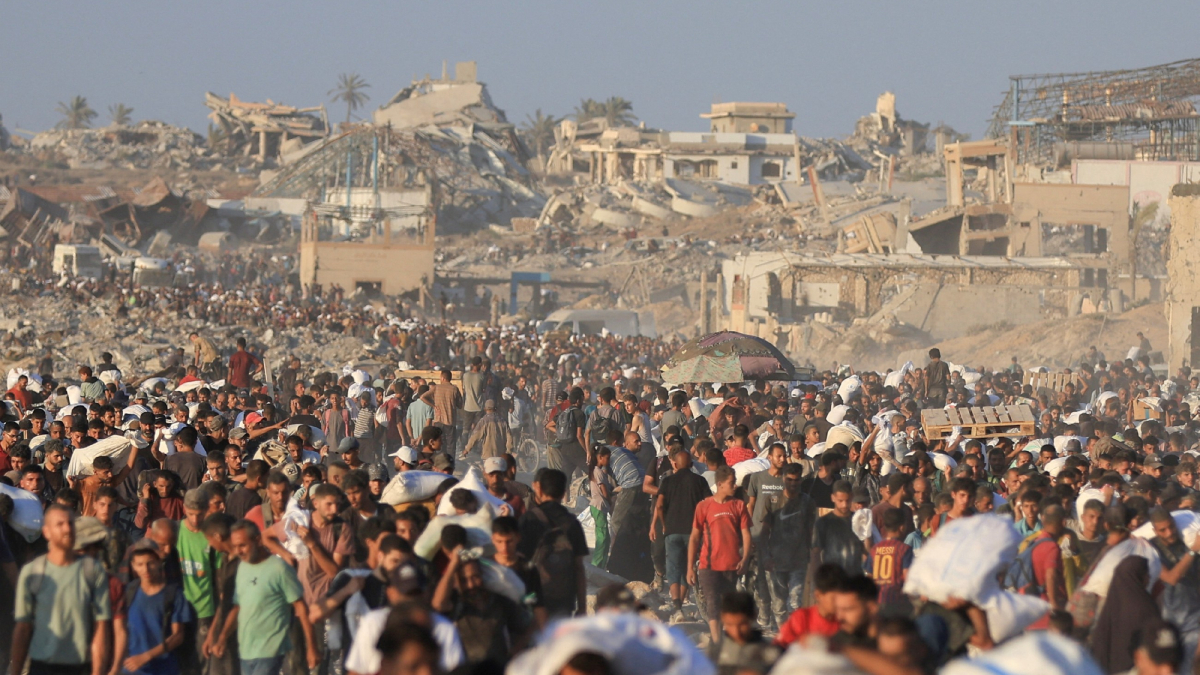

At least 48 Palestinians were killed and many more wounded on Wednesday while crowding at the Zikim Crossing in Gaza, a key humanitarian aid entry point, according to medical officials at Shifa Hospital. The incident marks one of the deadliest in a series of aid-related tragedies in the war-torn territory, where starvation looms large.

Shifa Hospital in Gaza City reported that the casualties were among hundreds of people waiting for food when gunfire erupted. It remains unclear who was responsible for the shooting, and the Israeli military—who controls the crossing—has yet to issue a statement. Footage from the scene showed wounded civilians being transported on wooden carts and others hauling sacks of flour through the chaos.
Another emergency center, Al-Saraya Field Hospital, received more than 100 casualties. Fares Awad, head of Gaza’s Health Ministry’s emergency services, warned that the death toll could climb further as some victims were transferred to other facilities.
This latest tragedy comes as Gaza reels from an intensifying hunger crisis. The Integrated Food Security Phase Classification (IPC), the global authority on famine monitoring, warned Tuesday of a rapidly worsening situation and “widespread death” unless urgent action is taken. Though IPC has not yet declared a famine, the conditions are already catastrophic: 89 children and 65 adults have died from malnutrition-related causes, the Health Ministry reported.
Israel’s military campaign, launched in response to Hamas’ deadly October 7, 2023, attack that killed 1,200 people and led to the abduction of 251 hostages, has left Gaza in ruins. According to the Hamas-run Health Ministry, over 60,000 Palestinians have been killed since, though the figures include both combatants and civilians.

On the ground, lawlessness is compounding the desperation. Crowds frequently overpower aid convoys, and incidents of deadly violence around food distribution points have become common. The United Nations says over 1,000 Palestinians have died while seeking aid since May, mostly in areas managed by the Israeli-backed Gaza Humanitarian Foundation (GHF).
Despite growing global calls to address the crisis, aid flow remains insufficient. Israel’s COGAT agency said that 220 trucks entered Gaza on Tuesday—less than half of the 500 to 600 trucks per day needed, according to UN agencies. Meanwhile, international airdrops have resumed but often land in inaccessible or dangerous zones, with some aid packages even falling into the sea.
U.S. envoy Steve Witkoff is set to arrive in Israel on Thursday for high-level talks, aiming to address both the humanitarian situation and negotiations over the remaining hostages, about 50 of whom are still held by Hamas.
As Gaza’s population of 2 million grapples with a deepening crisis, the lack of sufficient and safe aid delivery continues to fuel one of the worst humanitarian disasters in recent history.
